











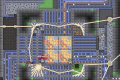

ADOFAI (A Dance Of Fire And Ice) is a rhythm-based game focused on precise input and timing. The player controls two orbiting objects that move along a track made of connected tiles. Each turn on the path requires a correctly timed input to keep the motion aligned with the rhythm. The game begins with a simple structure, but the mechanics quickly demand concentration and consistency. There is no character customization or narrative direction, as the entire experience is built around interaction with rhythm and movement.



ADOFAI
Advertisement

Advertisement






Rhythm As The Core Mechanic
The central mechanic of A Dance Of Fire And Ice is timing. The player presses a single button to match the beat of the music while the objects move forward along the path. Every turn represents a required input, and missing the timing causes an immediate failure. Unlike rhythm games that rely on visual prompts, this game places emphasis on listening and internalizing rhythm patterns. The visual path is static, but the rhythm changes constantly, forcing the player to adapt without relying on memorization alone.
Structure And Player Interaction
The game progresses through a sequence of levels, each introducing different rhythmic patterns and movement styles. The difficulty increases through timing complexity rather than speed. The player must learn to recognize irregular beats, pauses, and tempo changes. While the controls remain simple, execution becomes more demanding as levels advance.
Key elements of interaction include:
- pressing in time with the music
- following directional changes in the path
- adapting to tempo variations
- restarting immediately after mistakes
This structure creates a loop where repetition improves performance, and mistakes become part of the learning process rather than a setback.
Visual Layout And Audio Design
The visual presentation of A Dance Of Fire And Ice is minimal and functional. The background remains clean to avoid distraction, while the path clearly indicates direction changes. Colors are used to distinguish rhythm patterns rather than decorate the scene. Audio plays a dominant role, as every movement is tied directly to the soundtrack. The absence of extra effects ensures that sound and timing remain the main focus throughout gameplay.
ADOFAI offers a focused experience centered entirely on rhythm control. It does not rely on story progression, unlockable content, or complex mechanics. Instead, it challenges the player to improve precision through repetition and attention. The game works equally well for short sessions or extended practice, depending on the player’s goals. Its design encourages consistency, making progress feel earned through timing accuracy rather than memorization or reflex speed alone.
Comments (0)


2026
