













Backrooms 2026 is a first-person horror exploration game that expands the concept of endless liminal spaces into a cooperative experience. The player enters a series of interconnected environments where navigation is uncertain and spatial logic is inconsistent. The game is designed for both solo and team-based play, with up to several participants working together to locate exits and survive within shifting levels.



Backrooms 2026
Advertisement

Advertisement
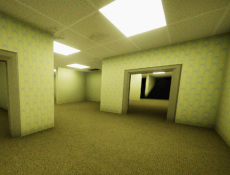



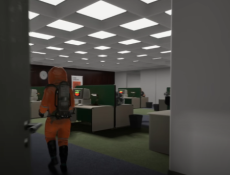


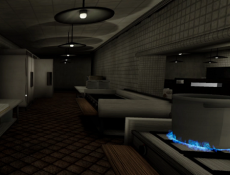
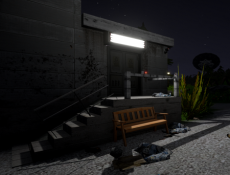

Backrooms 2026 is a first-person horror exploration game that expands the concept of endless liminal spaces into a cooperative experience. The player enters a series of interconnected environments where navigation is uncertain and spatial logic is inconsistent. The game is designed for both solo and team-based play, with up to several participants working together to locate exits and survive within shifting levels.
Environment And Level Design
The game world is divided into multiple levels that vary in structure and visual identity. Some areas resemble empty office spaces with repeating layouts, while others introduce new themes and spatial configurations. Each level is designed to challenge orientation by limiting recognizable landmarks and altering scale or direction.
Players move through these environments without maps or clear instructions. The design relies on observation and memory, requiring players to identify subtle differences between areas. Hidden routes and transitions connect levels, making exploration the primary method of progression.
Core Gameplay Loop
The gameplay is built around exploration, cooperation, and survival within unpredictable environments. Players must navigate, communicate, and respond to changing conditions.
- Exploring levels to find exits or hidden paths
- Communicating with teammates to share information
- Avoiding hazards and environmental threats
- Managing movement and positioning
- Repeating attempts after failure to improve navigation
These actions form a continuous loop where knowledge gained from previous runs improves future outcomes. The game emphasizes coordination when played in multiplayer mode.
Cooperative Mechanics
A key feature of Backrooms 2026 is its cooperative system. Players can work together in small groups, sharing observations and coordinating movement through complex layouts. Communication becomes necessary when navigating large or confusing areas where individual players may lose orientation.
Team-based play also affects survival. Players can assist each other in avoiding threats or locating safe paths, increasing the chances of reaching new levels. The design encourages interaction rather than isolated exploration.
Progression And Experience Structure
Progression is based on reaching new levels and understanding how each environment functions. There are no traditional upgrades or character development systems. Instead, advancement depends on knowledge, coordination, and repeated attempts.
Each level introduces new conditions, requiring adjustments in strategy and movement. The sequence of levels creates a forward structure, but navigation within each area remains open and unpredictable.
Backrooms 2026 uses a combination of exploration and cooperation to create a structured survival experience. By focusing on navigation, communication, and environmental awareness, it builds a system where progress depends on understanding space and adapting to changing conditions.
Comments (0)


2026
