










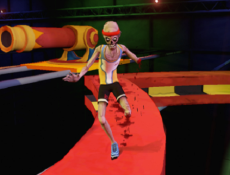
Ben And Ed is a third-person platform game built around navigating structured obstacle courses with a zombie character. The player progresses through levels filled with mechanical traps that require precise movement and timing. The objective is to reach the end of each stage while avoiding hazards that can interrupt progress. The design emphasizes repetition and improvement rather than exploration or narrative progression.



Ben And Ed
Advertisement
Advertisement







Ben And Ed is a third-person platform game built around navigating structured obstacle courses with a zombie character. The player progresses through levels filled with mechanical traps that require precise movement and timing. The objective is to reach the end of each stage while avoiding hazards that can interrupt progress. The design emphasizes repetition and improvement rather than exploration or narrative progression.
Movement And Control Precision
The control system in Ben And Ed is focused on accurate movement. Players must manage speed, direction, and jump timing to pass through narrow gaps and moving hazards. The character responds directly to input, but the physics system requires careful adjustment during each action.
Damage affects how the character moves. Losing limbs reduces control options and changes how obstacles must be approached. This creates a dynamic situation where players must adapt in real time based on the character’s current condition.
Hazard Layout And Progression
Each level is composed of multiple sections that introduce different trap combinations. Hazards include spinning blades, crushing mechanisms, and unstable platforms. These elements are arranged in sequences that increase in difficulty as the player advances.
Key gameplay elements include:
- moving through multi-section obstacle courses
- timing actions to avoid hazards
- adjusting movement after taking damage
- learning patterns of traps
- reaching checkpoints and exits
These mechanics define the progression through each level.
Failure And Repetition
Failure is a central part of the gameplay loop. Players are expected to attempt sections multiple times to understand timing and positioning. Each failed attempt provides information about how obstacles behave and how to improve movement.
Checkpoints divide levels into manageable segments. This allows players to focus on mastering smaller sections without restarting from the beginning each time. The repetition supports gradual skill improvement.
Progression And Performance
As players move forward, levels introduce more complex layouts and tighter timing requirements. Success depends on maintaining consistency across longer sequences of obstacles. The game increases difficulty by combining multiple hazards that require coordinated movement.
Replayability is based on refining performance. Players can revisit completed levels to reduce completion time or improve execution accuracy. The interaction between physics and player input ensures that each run may differ slightly.
Comments (0)


2026
