











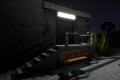
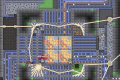

Berry Bury Berry is a first-person incremental game built around repetitive interaction and gradual system development. The player operates in a limited space where progress is achieved through consistent actions rather than competition or timed objectives. There is no traditional match structure, and sessions are not divided into rounds. Instead, the game continues as long as the player chooses to interact with its systems. The primary goal is to generate resources and use them to unlock further layers of interaction and progression.



Berry Bury Berry
Advertisement
Advertisement









Berry Bury Berry is a first-person incremental game built around repetitive interaction and gradual system development. The player operates in a limited space where progress is achieved through consistent actions rather than competition or timed objectives. There is no traditional match structure, and sessions are not divided into rounds. Instead, the game continues as long as the player chooses to interact with its systems. The primary goal is to generate resources and use them to unlock further layers of interaction and progression.
Core Gameplay Foundation
The gameplay foundation of Berry Bury Berry is based on simple input that produces measurable output. Players collect berries and deliver them to a central interaction point that converts these resources into progress. This action is repeated throughout the game, forming a stable loop that does not change mechanically. What changes over time is the efficiency of each action and the number of systems connected to it. The game avoids sudden shifts in control schemes, allowing players to focus on understanding how their actions affect long-term outcomes.
Progression And Resource Allocation
Progression is controlled by how resources are allocated rather than how quickly actions are performed. Players decide when to invest berries into upgrades and when to continue accumulating them. Each upgrade affects production, conversion, or access to new mechanics. The pacing is entirely player-driven, with no forced progression checkpoints. Several core elements define this system:
- Repeated resource generation through interaction
- Conversion of resources into permanent upgrades
- Unlocking additional systems tied to progression thresholds
- Gradual reduction of manual input through efficiency gains
These elements ensure that progress feels continuous while remaining dependent on player decisions rather than external conditions.
Environmental Structure And Feedback
The environment in Berry Bury Berry is compact and static in layout, but responsive to progression. As players unlock upgrades, new objects or interaction points become available within the same space. These changes function as feedback rather than challenges, visually representing advancement. Navigation remains simple, keeping focus on interaction rather than exploration. The environment effectively becomes a reflection of progress rather than a source of obstacles.
Berry Bury Berry is designed for long-term engagement across multiple sessions. Progress persists between play periods, allowing players to return without losing momentum. There is no defined endpoint that forces completion. Instead, players determine their own stopping points based on efficiency goals or curiosity about unlocked systems. Over time, gameplay shifts from manual repetition toward managing systems that automate or accelerate progress.
Comments (0)


2026
