










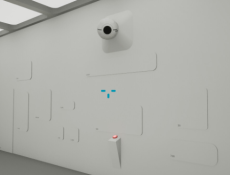
Click To Continue is a minimalist interactive game that centers on repetition and gradual discovery. The player begins in a confined space with almost no information about goals or mechanics. There is a single available interaction, and progress depends on continuing that action without guidance. The game establishes its structure through restraint, allowing understanding to emerge only after sustained engagement.



Click To Continue
Advertisement
Advertisement




Click To Continue is a minimalist interactive game that centers on repetition and gradual discovery. The player begins in a confined space with almost no information about goals or mechanics. There is a single available interaction, and progress depends on continuing that action without guidance. The game establishes its structure through restraint, allowing understanding to emerge only after sustained engagement.
Starting State and Player Orientation
At the beginning, Click To Continue presents an environment with limited visual elements and no instructions. The absence of objectives forces the player to rely on cause and effect rather than direction. Each interaction produces a small change, but these changes are not explained. This design encourages the player to observe patterns and remain attentive to subtle shifts. Early gameplay is defined by patience, as progress is measured by accumulation rather than immediate results.
System Growth and Layered Interaction
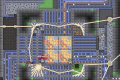
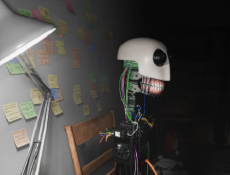
As interaction continues, the environment begins to reveal additional components. These elements expand the original concept without removing the initial action. Panels, counters, and interfaces appear over time, forming a connected system that remains dependent on the same core input. In the middle of the experience, the player repeatedly engages with several recurring activities that shape the main loop:
- Repeating input to advance internal states
- Monitoring counters as they approach thresholds
- Interacting with unlocked panels when conditions change
- Adjusting basic parameters that influence progression
- Enabling automation that reduces manual repetition
These activities transform the experience from pure repetition into a process of coordination and monitoring.
Shift in Pacing and Player Role
Click To Continue alters its pacing by adding responsibility rather than speed. Early stages are slow and uniform, but later stages require attention to multiple elements at once. The player’s role changes from active input to oversight, as automated systems take over part of the workload. Progress becomes less about clicking and more about understanding how systems interact and influence one another.
Progress Representation Without Metrics
The game avoids traditional indicators such as levels, scores, or achievements. Advancement is communicated through visible complexity and the availability of new systems. Nothing replaces earlier mechanics; instead, new layers are added on top of existing ones. This creates a continuous structure where progress feels cumulative and procedural rather than segmented or goal-based.
Comments (0)


2026
