














Cryptogram is a word puzzle game that challenges players to decode encrypted text using logic and language knowledge. Each puzzle consists of a sentence or quotation where every letter has been replaced by another letter according to a consistent substitution rule. The player must determine the original message by identifying correct letter mappings. The game does not rely on reflexes or timers, instead rewarding careful observation and structured reasoning.



Cryptogram
Advertisement
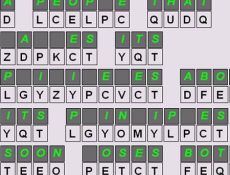
Advertisement
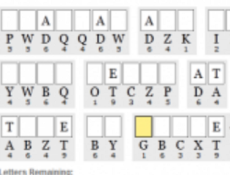




Cryptogram is a word puzzle game that challenges players to decode encrypted text using logic and language knowledge. Each puzzle consists of a sentence or quotation where every letter has been replaced by another letter according to a consistent substitution rule. The player must determine the original message by identifying correct letter mappings. The game does not rely on reflexes or timers, instead rewarding careful observation and structured reasoning.
Underlying Cipher Rules
All Cryptogram puzzles are built on a fixed and transparent rule set. A single encoded letter always represents the same real letter throughout the entire puzzle, and no two encoded letters can correspond to the same character. Word spacing, punctuation, and capitalization are preserved, giving players clear clues about sentence structure. Because the rules never change, the challenge comes from interpretation rather than learning new mechanics, allowing players to apply the same logical approach across different puzzles.
Step-By-Step Deduction Process
Solving a cryptogram is a gradual process based on pattern recognition. Players examine how often certain symbols appear and where they are positioned within words. Common language features such as short words, repeated letters, and familiar grammatical constructions often provide the first reliable breakthroughs. Each confirmed substitution affects multiple parts of the text, helping the solution expand logically rather than randomly.
In the middle of a typical solving session, players usually repeat a consistent set of analytical actions:
- scanning the puzzle for frequently used symbols
- identifying short or repeated word patterns
- testing possible letter substitutions
- verifying grammar and sentence flow
- adjusting earlier guesses when contradictions appear
This cycle continues until the entire message becomes readable.
Interface And Player Freedom
Most digital versions of Cryptogram are designed to support flexible problem solving. Players can enter, remove, or change letter guesses at any time, allowing them to test ideas without penalty. There are typically no enforced time limits, which encourages thoughtful analysis instead of rushed decisions. Progress can often be saved, enabling players to return to a puzzle later without losing their work.
Comments (0)


2026
