






















Demon Bluff is a card puzzle game where the player has to uncover hidden evil characters by reading clues and testing every statement. The game does not use a traditional adventure format with maps, missions, or combat scenes. Everything happens through the cards on the table. Each character has a role, and that role can provide information about the others. The problem is that some cards are lying, so the player must decide which clues are useful and which ones are meant to mislead.



Demon Bluff
Advertisement
Advertisement







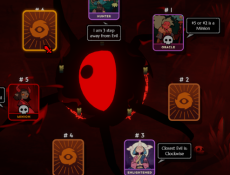
Demon Bluff is a card puzzle game where the player has to uncover hidden evil characters by reading clues and testing every statement. The game does not use a traditional adventure format with maps, missions, or combat scenes. Everything happens through the cards on the table. Each character has a role, and that role can provide information about the others. The problem is that some cards are lying, so the player must decide which clues are useful and which ones are meant to mislead.
A Game of Controlled Doubt
The main challenge in Demon Bluff is learning how much trust to give each card. A revealed character may say something that sounds clear, but that does not automatically make it true. Another card can support the same idea, or it can create a contradiction. The player has to compare the whole board instead of reacting to one clue. This makes each round feel like a small logic case where every new piece of information can change the answer.
Roles Shape the Puzzle
Demon Bluff does not have levels in the usual sense. Its structure is based on separate rounds, and each round gives the player a new arrangement of cards. The roles decide how the puzzle works. Some characters help identify safe cards, others give information about nearby threats, and corrupted cards can copy that same logic to hide their real side. The player’s task is to understand which role claims fit together and which ones break the pattern.
A careful player usually needs to:
- reveal cards in a useful order
- read every role description closely
- compare claims from several characters
- look for statements that cannot all be true
- delay executions until there is enough evidence
- use mistakes as information when they happen
- protect health by avoiding blind guesses
The Risk Behind Every Execution
The execution button is what gives Demon Bluff its pressure. The player may suspect a card early, but acting too soon can be dangerous. A wrong choice costs health and can leave less room for later errors. Because of this, the game rewards patience more than speed. The strongest moves usually come after several clues connect and the player can explain why a specific card must be evil.
Turning Confusion Into Evidence
The best way to play Demon Bluff is to treat confusion as part of the design. If the table feels unclear, that usually means the player needs more comparisons, not faster guesses. Start with the most reliable-looking information, then check which cards agree with it and which ones make it impossible. When a lie is exposed, it can become one of the most useful clues in the round. Step by step, the player can remove wrong options and find the hidden threat before the board becomes too dangerous.
Comments (0)


2026
