



















Don’t Panic! It is Just Turbulence is a cooperative simulation and puzzle game where two players must work together during emergency situations aboard damaged aircraft. One player takes the role of the Pilot and interacts directly with the cockpit systems, while the second player becomes the Air Traffic Controller who provides instructions and technical support. The gameplay is based on communication, coordination, and solving problems under time pressure. Each mission presents different aircraft failures that must be handled before the plane loses control.



Don’t Panic! It is Just Turbulence
Advertisement
Advertisement
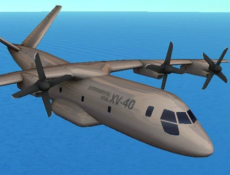



Don’t Panic! It is Just Turbulence is a cooperative simulation and puzzle game where two players must work together during emergency situations aboard damaged aircraft. One player takes the role of the Pilot and interacts directly with the cockpit systems, while the second player becomes the Air Traffic Controller who provides instructions and technical support. The gameplay is based on communication, coordination, and solving problems under time pressure. Each mission presents different aircraft failures that must be handled before the plane loses control.
Cooperative Gameplay Structure
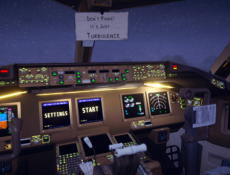
The game is designed around teamwork between two participants. The Pilot can see warning lights, damaged instruments, and system failures inside the aircraft, but does not have access to the full repair instructions. The Air Traffic Controller reads manuals and guides the Pilot through emergency procedures. Because of this setup, players must exchange information clearly and react quickly to changing situations.
Every flight introduces different technical problems. Some emergencies affect the engines, while others disable navigation, communication, or electrical systems. The game gradually increases difficulty by adding more instruments and more complicated emergency sequences. Certain missions require players to complete several tasks simultaneously while alarms and warnings continue inside the cockpit.
Emergency Systems and Puzzle Mechanics
Don’t Panic! It is Just Turbulence combines simulation mechanics with timed puzzle-solving. Players must interpret instructions, activate switches, and stabilize the aircraft before the situation becomes critical. Timing is important because delayed actions can cause additional system failures during the flight.
The game contains several important features:
- cooperative communication gameplay
- cockpit system interaction
- aircraft emergency management
- timed puzzle sequences
- multiple aircraft types
- increasing mission difficulty
Different aircraft have unique control layouts and emergency procedures. Early missions focus on basic communication and navigation systems, while later flights involve more advanced repairs and larger cockpit interfaces. Some situations also include turbulence and changing weather conditions that make navigation more difficult.
Levels and Mission Progression
The game progresses through a series of flight scenarios instead of a traditional story campaign. Each level represents a separate emergency situation with different aircraft systems and objectives. Early stages work as tutorials for cockpit interaction and communication methods. Later missions become more difficult because several systems can fail at once, forcing players to divide responsibilities carefully.
Comments (0)


2026
