














Dots And Boxes is a logic-based strategy game built around connecting points on a grid to form completed boxes. Two players take turns drawing a single line between adjacent dots, either horizontally or vertically. When a player completes the fourth side of a box, that box becomes theirs and they earn an additional turn. The goal is to claim more boxes than the opponent by the time the grid is full. Although the rules are simple, the outcome depends on prediction, timing, and control of chain reactions.



Dots And Boxes
Advertisement
Advertisement










Dots And Boxes is a logic-based strategy game built around connecting points on a grid to form completed boxes. Two players take turns drawing a single line between adjacent dots, either horizontally or vertically. When a player completes the fourth side of a box, that box becomes theirs and they earn an additional turn. The goal is to claim more boxes than the opponent by the time the grid is full. Although the rules are simple, the outcome depends on prediction, timing, and control of chain reactions.
Game Structure And Rules
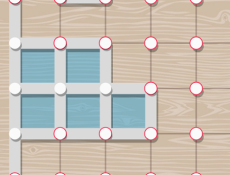
At the start of Dots And Boxes, the grid appears as a pattern of dots arranged in rows and columns. Players alternate turns, each adding one connecting line between two neighboring dots. When a player finishes a square, it is marked with their symbol or color, and they immediately take another turn. This extra move introduces the main layer of strategy, as one decision can lead to multiple box completions. The match continues until every possible line is drawn, and the player with the highest number of claimed boxes wins.
Tactical Planning And Control
The core challenge lies in deciding when to give up control and when to trigger a chain of boxes. Players learn to recognize “safe moves” — lines that do not allow the opponent to complete a box — and “risky moves” that open opportunities for them. Most of the early game is spent avoiding risk, while the final stages require precision to capture long chains efficiently. Managing the transition between these two phases determines victory or loss.
Fundamental gameplay strategies include:
- Drawing lines that limit opponent opportunities
- Forcing the opponent to open scoring chains
- Controlling sequences of boxes for maximum gain
- Recognizing endgame positions several moves ahead
Variations And Game Modes
Dots And Boxes can be played on grids of different sizes. Smaller grids offer short, fast sessions, while larger ones allow deeper planning and longer combinations. Digital versions often add score tracking, adjustable difficulty, and online play. Regardless of format, the visual interface remains simple — dots, lines, and color-coded boxes. These minimal elements ensure that focus stays on logic rather than presentation.
Skill Development And Replay Value
Each session of Dots And Boxes helps develop pattern recognition and strategic foresight. Players improve by learning how to control the tempo of the game and by predicting sequences before they unfold. While the game has deterministic mechanics, no two rounds play out identically because decisions compound differently each time. The result is a repeatable test of logic and timing, where success depends on consistency rather than luck. Over time, mastering Dots And Boxes becomes an exercise in anticipating the opponent while maintaining control of the final phase.
Comments (0)


2026
