













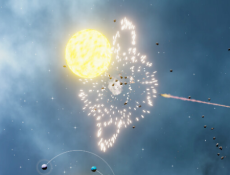
Drifter Star Evolution is a space progression game where the player develops from a small cosmic fragment into larger celestial forms by collecting surrounding matter. The gameplay is structured around gradual expansion, where each interaction contributes to overall growth. Players move through a field of objects, selecting targets based on size and proximity. The system emphasizes steady development rather than immediate results, creating a continuous loop of movement and absorption.



Drifter Star Evolution
Advertisement
Advertisement





Drifter Star Evolution is a space progression game where the player develops from a small cosmic fragment into larger celestial forms by collecting surrounding matter. The gameplay is structured around gradual expansion, where each interaction contributes to overall growth. Players move through a field of objects, selecting targets based on size and proximity. The system emphasizes steady development rather than immediate results, creating a continuous loop of movement and absorption.
Core Mechanics And Scaling
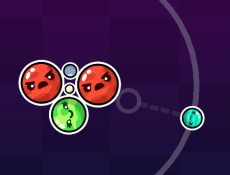
The main mechanic in Drifter Star Evolution is size-based interaction. Players can absorb objects smaller than their current form, which increases mass and unlocks new stages. As size increases, the scale of interaction changes, allowing engagement with larger bodies. This creates a progression system where growth directly expands available opportunities. However, larger size may also reduce mobility, requiring adjustments in movement and positioning.
Environment And Object Interaction
The environment is populated with various types of cosmic matter, including particles, asteroids, and larger structures. Each type of object serves as a potential resource or obstacle. Players must navigate through these elements while maintaining awareness of their surroundings. The density of objects can vary, influencing how quickly growth occurs and how often risks appear.
- Absorption of smaller objects for growth
- Interaction with multiple types of cosmic matter
- Changing scale of the environment based on size
- Gradual access to larger targets
- Continuous movement without fixed levels
Strategy And Growth Balance
Progress in Drifter Star Evolution depends on balancing expansion with control. Rapid growth can expose the player to larger threats before they are ready to handle them. Slower progression may be safer but can limit access to valuable resources. Players must determine an approach that matches their current stage and surroundings.
The game encourages players to refine their decision-making over time. Choosing efficient paths through the environment can improve resource collection and reduce unnecessary risk. Observing patterns in object distribution also helps in planning movement.
Comments (0)


2026
