











Egyptian Rat Screw is a fast-paced card game traditionally played with a standard deck and multiple players. The game does not rely on turns in the usual sense, as all players react simultaneously to cards placed on a central pile. The main objective is to collect all cards in the deck by winning piles through specific card patterns and quick reactions. Because the rules are simple and equipment requirements are minimal, the game is often played in informal settings.



Egyptian Rat Screw
Advertisement
Advertisement





Egyptian Rat Screw is a fast-paced card game traditionally played with a standard deck and multiple players. The game does not rely on turns in the usual sense, as all players react simultaneously to cards placed on a central pile. The main objective is to collect all cards in the deck by winning piles through specific card patterns and quick reactions. Because the rules are simple and equipment requirements are minimal, the game is often played in informal settings.
Basic Rules And Setup
At the beginning of Egyptian Rat Screw, the deck is evenly divided among players, who keep their cards face down. Players take turns placing the top card of their deck onto a shared pile in the center. When certain cards appear, such as face cards, special conditions are triggered that temporarily change how the round continues. If these conditions are not met, the pile becomes available to be claimed. Attention and memory are important, since missed opportunities can quickly change the balance of the game.
Slapping Mechanics And Card Patterns
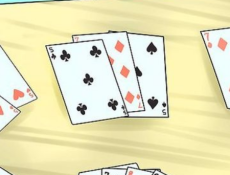
A defining feature of Egyptian Rat Screw is the slapping mechanic. When a specific pattern appears in the pile, any player can slap it to claim all cards in the center. Correct slaps are rewarded, while incorrect slaps often result in penalties. These rules encourage constant focus, as patterns can appear at any moment and disappear just as quickly.
Common slap conditions usually include:
- Two cards of the same value placed consecutively
- A card sandwich pattern with matching outer cards
- A sequence where cards increase or decrease by one
- Special face card combinations agreed on before play
Face Cards And Challenges
Face cards introduce a challenge system that temporarily restricts slapping and shifts pressure to the next player. When a face card is played, the following player has a limited number of chances to respond with another face card. If they fail, the player who laid the original face card wins the pile. This system adds structure to the otherwise continuous flow and creates moments of focused attention.
Player Elimination And Game Flow
As the game progresses, players may lose all their cards and become inactive. Depending on agreed rules, eliminated players may still be allowed to slap piles. The pace of the game can vary significantly based on player count and reaction speed. There are no fixed rounds or time limits, so a single session can be brief or extended.
Egyptian Rat Screw remains engaging through repetition because outcomes depend heavily on player behavior rather than card order alone. Each group may adjust rules to suit preferences, which changes how the game unfolds. The emphasis on reaction and observation keeps players involved throughout the session, making the game suitable for repeated play without additional setup or progression systems.
Comments (0)


2026
