













Five Nights at Epstein’s is a survival horror game where the player must endure a sequence of night shifts inside a restricted location. The gameplay is built around staying in one place while monitoring activity through available systems. Each night introduces increasing pressure, requiring faster reactions and more precise control of limited resources. The objective is to remain safe until the end of each shift without direct confrontation.



Five Nights at Epstein’s
Advertisement

Advertisement








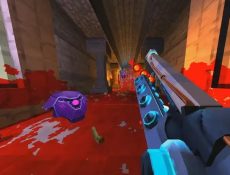

Night-Based Structure
The game is divided into separate nights, each functioning as an individual challenge. At the start, players are introduced to basic mechanics such as monitoring surroundings and responding to threats. As nights progress, new behaviors and patterns emerge, making each shift more demanding.
Time management is central to progression. Players must survive until the end of a night cycle, which gradually becomes harder as conditions change. Mistakes often result in immediate failure, reinforcing the need for consistent execution.
Surveillance and Control
The primary interaction in Five Nights at Epstein’s involves controlling systems rather than moving freely. Players observe different areas using cameras or similar tools and react to changes in real time. The interface allows switching between views and activating defensive options when necessary.
Core gameplay elements include:
- monitoring multiple areas through surveillance systems
- managing a limited power supply
- closing or opening access points to block threats
- responding to sound and movement cues
- maintaining control until the shift ends
These actions form the core gameplay loop.
Threat Behavior
Enemy behavior changes over time, requiring players to adapt their approach. Some threats move quickly, while others rely on indirect cues such as sound. Understanding these patterns becomes essential for survival, as reacting too late can lead to failure.
The game does not provide explicit explanations for all behaviors. Players must learn through repeated attempts, identifying patterns and adjusting strategies accordingly.
Replay and Progression
Five Nights at Epstein’s is designed for repeated play, where each failure provides information for improvement. Completing all nights requires mastering system management and reaction timing. The structure encourages players to refine their approach with each attempt.
The gameplay loop remains consistent across sessions, but difficulty increases with each stage. Over time, players improve their ability to track threats, manage resources, and maintain control under pressure.
Comments (0)


2026
