












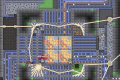

Five Nights At Epstein’s is an online horror game built around a night-based survival structure. The player is placed in a limited space and must rely on a control interface to track incoming threats. The experience is divided into five consecutive nights, each designed to test reaction speed, awareness, and system management. The game does not focus on exploration, instead keeping the player stationary and dependent on indirect observation tools.



Five Nights at Epstein’s
Advertisement

Advertisement
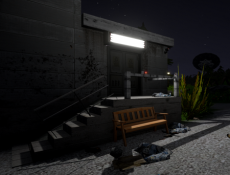









Structure Of Nights And Difficulty Growth
The progression is organized into clearly defined stages. During the first night, the player is introduced to basic mechanics and slower enemy movement. With each new night, additional elements are introduced, including faster threats and more complex patterns. This gradual increase forces the player to adapt and refine their approach.
There is no variation in the main objective. The task remains consistent: survive until the end of the shift. However, the methods required to achieve this become more demanding as the game advances.
Control Systems And Interaction
All interaction happens through a digital interface. The player switches between different systems to monitor activity and prevent enemies from getting too close. Each system serves a specific purpose, and improper use can lead to failure.
Main actions available include:
• Checking camera feeds for movement
• Triggering sound signals to redirect threats
• Controlling vents or access points
• Monitoring system limits such as power usage
• Reacting to sudden changes in the environment
These elements require constant attention. The player must quickly decide which system needs priority at any given moment.
Audio And Visual Feedback
The game relies heavily on indirect feedback. Visual information is often incomplete, forcing the player to interpret static images or limited camera angles. Audio plays an important role, as certain sounds indicate proximity or movement of threats.
The environment itself remains unchanged throughout the game. Instead of dynamic level design, tension is created through uncertainty and restricted visibility. This keeps the focus on interpreting signals rather than navigating space.
Availability And Technical Simplicity
Five Nights At Epstein’s can be played directly in a browser, which removes the need for downloads or installations. This allows users to access the game quickly on both desktop and mobile devices. The technical simplicity supports fast loading and minimal system requirements.
The distribution model also contributes to its visibility, as browser games are easily shared across platforms without additional setup.
Comments (0)


2026
