








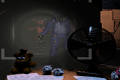


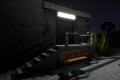
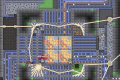
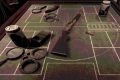
Flesh, Blood, & Concrete is a short exploration game created with RPG Maker and released on itch.io. The player controls a character named Lera who enters an apartment building after being stranded during a snowstorm. From the start, the game avoids combat, puzzles, or scoring systems. Progress depends entirely on movement through the environment, observation of surroundings, and interaction with narrative elements placed throughout the building. The experience is self-contained and designed to be completed in a single sitting.



Flesh, Blood, & Concrete
Advertisement

Advertisement

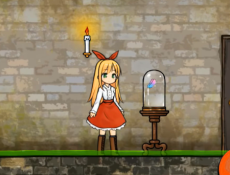




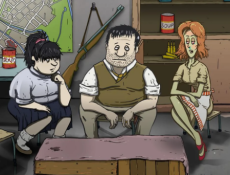
Flesh, Blood, & Concrete is a short exploration game created with RPG Maker and released on itch.io. The player controls a character named Lera who enters an apartment building after being stranded during a snowstorm. From the start, the game avoids combat, puzzles, or scoring systems. Progress depends entirely on movement through the environment, observation of surroundings, and interaction with narrative elements placed throughout the building. The experience is self-contained and designed to be completed in a single sitting.
Spatial Structure And Movement
The apartment complex serves as the only playable location, and its layout plays a central role in progression. Corridors, staircases, and rooms connect in ways that are initially familiar but become less predictable over time. The player is free to explore without time limits or penalties, which places emphasis on navigation rather than efficiency. New areas open as the player moves forward, making spatial discovery the main driver of advancement.
Interaction Model
Interaction in Flesh, Blood, & Concrete is minimal and consistent. The player moves through spaces, examines objects, and occasionally engages in dialogue. Items do not function as tools or resources but instead provide information or context. There is no inventory management beyond reviewing collected descriptions, and controls remain unchanged throughout the game.
Key interaction components include:
- Free movement across floors and rooms
- Object inspection that delivers narrative fragments
- Dialogue triggers based on proximity
- Environmental transitions tied to exploration
- A continuous flow without fail states
These elements keep attention focused on the environment and its meaning rather than on mechanics.
Narrative Delivery
The story is conveyed indirectly through space, text, and limited character interaction. As Lera explores deeper into the building, she encounters another character whose presence adds context to the setting and her personal situation. Dialogue is sparse and structured, allowing the player to infer relationships and motivations from short exchanges. Much of the narrative is implied through visual cues and object descriptions rather than explicit explanation.
Pacing And Player Role
Pacing in Flesh, Blood, & Concrete is controlled by player movement. There are no forced sequences or sudden interruptions, and the game allows pauses between discoveries. This structure positions the player as an observer rather than an active problem solver. Progress feels continuous because each new space connects logically to the previous one, even as the environment changes.
The game does not offer multiple paths or endings in a traditional sense. Instead, it presents a single narrative line that unfolds as exploration continues. Flesh, Blood, & Concrete focuses on how space, movement, and limited interaction can communicate a story without relying on complex systems. The result is an experience where understanding emerges gradually through attention and navigation rather than challenge or mastery.
Comments (0)


2026
