













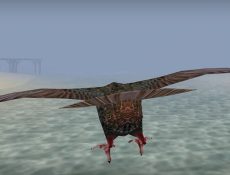
Fly Like A Bird 3 is a flight simulation game that places the player in control of a bird navigating open environments. Unlike traditional flight simulators that focus on aircraft, this game centers on free movement, physics-based flying, and exploration. The player experiences the world from a bird’s perspective, using momentum and direction to glide through cities, parks, and open spaces. The game does not rely on missions or objectives, instead allowing players to move freely and experiment with flight mechanics.



Fly Like A Bird 3
Advertisement
Advertisement






Movement And Flight Mechanics
The main focus of Fly Like A Bird 3 is the flight system. Players control speed, altitude, and direction using simple inputs that simulate gliding and flapping. Movement feels continuous rather than segmented, encouraging smooth navigation through the environment. Landing, taking off, and maintaining altitude require attention to momentum, making flight feel responsive without being overly complex. The lack of strict rules allows players to explore at their own pace and learn the mechanics naturally through movement.
Interaction And Gameplay Elements
While the game does not include traditional challenges or levels, it offers interactive elements that give structure to exploration. Players can land on objects, fly through narrow spaces, or move between distant locations using air currents. The environment reacts to movement rather than directing it, making the experience feel open-ended. Common gameplay elements include:
- Free flight across open maps
- Landing on buildings or terrain
- Using momentum to gain altitude
- Exploring large areas without restrictions
- Switching between different bird types
These elements allow players to experiment with movement rather than focusing on goals or completion.
Environment Design And Scale
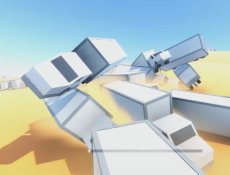
The environments in Fly Like A Bird 3 are designed to feel spacious and open. Maps often include urban areas, natural landscapes, and open skies that encourage long-distance flight. The scale of the world helps reinforce the sensation of freedom, as players are not confined to narrow paths or scripted routes. Visual simplicity ensures that performance remains smooth while still offering enough detail to make navigation clear and engaging.
Comments (0)


2026
