











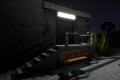
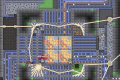
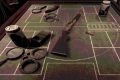
FNAF Rewritten 87 is a reinterpretation of a well-known night survival concept that focuses on control, observation, and limited response options. The game places the player inside a confined work environment where threats develop gradually over time. Instead of relying on direct interaction, the experience is shaped by monitoring systems and reacting to changes that are often subtle and delayed.



FNAF Rewritten 87
Advertisement

Advertisement









FNAF Rewritten 87 is a reinterpretation of a well-known night survival concept that focuses on control, observation, and limited response options. The game places the player inside a confined work environment where threats develop gradually over time. Instead of relying on direct interaction, the experience is shaped by monitoring systems and reacting to changes that are often subtle and delayed.
Environment And Scenario Design
The setting is built around a single interior location that the player must manage throughout multiple night shifts. Rooms, hallways, and vents are observed indirectly through surveillance systems rather than physical movement. The space feels static at first, but its function changes as enemy behavior evolves. Environmental details and system responses provide context without explicit storytelling, allowing players to infer meaning through repetition and failure.
Monitoring Systems And Player Decisions
The player’s main responsibility is to track animatronic movement using cameras and limited interface tools. These systems are intentionally restrictive, preventing constant monitoring of all areas at once. Every action consumes time and attention, forcing the player to choose what to observe and what to ignore. Incorrect prioritization often leads to sudden failure rather than gradual warning.
Key actions during gameplay usually include:
- switching between camera feeds
- identifying changes in enemy positions
- choosing when to activate defensive options
- managing attention between multiple threats
- surviving until the shift ends
Threat Behavior And Adaptation
Enemy behavior follows structured patterns that shift as the game progresses. Early nights introduce basic movement rules, while later nights combine multiple threats that act simultaneously. The game does not explain these patterns directly, requiring players to learn through observation. Adaptation becomes more important than speed, as reacting too quickly or too late can be equally ineffective.
Audio Cues And Visual Limitations
Sound plays a critical role in conveying information. Subtle audio signals often indicate changes that are not immediately visible on screen. Visual feedback is deliberately limited, with static camera angles and low visibility reinforcing uncertainty. Together, these elements create a system where players must interpret incomplete information rather than rely on clear indicators.
Comments (0)


2026
