










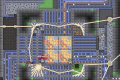
Free For Fall is a multiplayer platform game built around short competitive rounds where players influence the course before racing through it. Each match begins not with movement, but with decision-making. Participants select obstacles from a limited pool and place them directly onto the level. This creates a shared space shaped by all players, where every choice can affect the final outcome. The result is a game structure that depends on both planning and execution rather than fixed level design.



Free For Fall
Advertisement
Advertisement
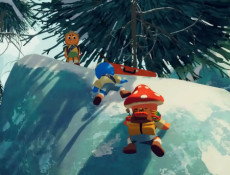




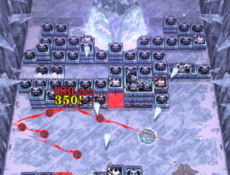

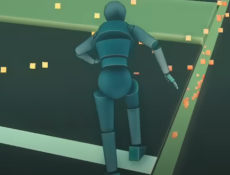
Free For Fall is a multiplayer platform game built around short competitive rounds where players influence the course before racing through it. Each match begins not with movement, but with decision-making. Participants select obstacles from a limited pool and place them directly onto the level. This creates a shared space shaped by all players, where every choice can affect the final outcome. The result is a game structure that depends on both planning and execution rather than fixed level design.
Player Interaction And Match Flow
After the placement phase ends, the race starts immediately. Players must navigate the course they helped create, dealing with hazards, gaps, and movement challenges in real time. Success depends on understanding how the placed objects interact with the environment and how other players might use or avoid them. Since all participants face the same course, small differences in timing and movement can decide the winner. Matches are designed to be short, allowing players to quickly move from one round to the next.
Core Mechanics And Systems
The mechanics of Free For Fall focus on movement control, obstacle logic, and shared responsibility for the level layout. There is no fixed solution to any course, as the layout changes with every match. Players can experiment with different placement strategies, learning how certain obstacles affect speed, balance, or route options. The system rewards observation as much as action, especially in multiplayer sessions where anticipating others matters.
At the center of the experience is a set of core elements that define how each round plays out:
- Shared obstacle selection before each race
- Real-time platforming with physics-based movement
- Competitive multiplayer for small groups
- Levels that change based on player decisions
- Scoring based on successful completion
Replay Value And Session Design
Because no two groups place obstacles in the same way, replay value comes from variation rather than progression. There is no linear campaign structure, and the game does not rely on narrative framing. Instead, repeated sessions allow players to refine strategies, test risky placements, or intentionally disrupt the course to challenge others. This makes the game suitable for casual sessions as well as more competitive play.
Free For Fall is designed around social interaction and experimentation. It works best in groups where players react to each other’s decisions and adapt quickly. The simplicity of the rules makes the game accessible, while the shared control over the level keeps matches unpredictable. Over time, players develop an understanding of how small changes in placement can lead to very different race outcomes.
Comments (0)


2026
