








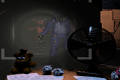

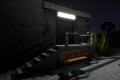
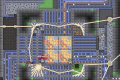
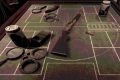
Gore In Crayon is a compact horror game that focuses on survival through navigation and restraint rather than direct action. The player is placed inside a confined indoor space and must move through rooms while avoiding a hostile presence. There are no weapons or combat options, so success depends on understanding the environment and choosing safe paths. Each session is brief and resets on failure, which places emphasis on learning through repetition instead of completing long sequences.



Gore In Crayon
Advertisement
Advertisement

Spatial Awareness And Player Behavior
The game’s core challenge comes from managing space and timing. Movement is limited to basic directional input, but every step can expose the player to danger. The hostile character moves independently, creating situations where waiting is safer than advancing. Because the game does not provide indicators or guidance, players must rely on memory and observation to judge when to move. This design rewards patience and careful route selection over quick reactions.
Room Layout And Environmental Use
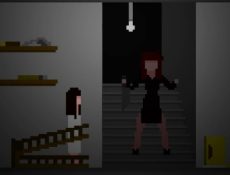
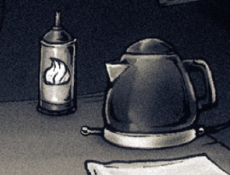
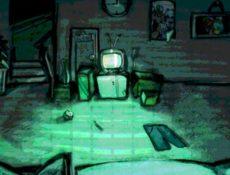
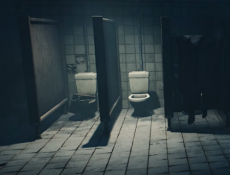
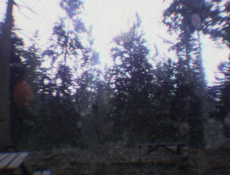
The interior layout is structured as a series of interconnected rooms and corridors. Some areas are accessible immediately, while others require interaction with specific objects to proceed. The environment is not decorative; each element serves a practical role in either blocking progress or enabling escape. Narrow passages reduce options, while certain rooms offer temporary safety if used correctly. The static layout contrasts with unpredictable threat movement, which keeps each attempt uncertain.
During gameplay, players typically deal with elements such as:
- Doors that restrict movement until conditions are met
- Hiding spots that interrupt pursuit temporarily
- Items required to unlock new sections
- Tight spaces that limit escape routes
These elements shape decision-making and pacing throughout each run.
Progress Without Guidance
Gore In Crayon does not include tutorials, objectives lists, or on-screen prompts. Progress is achieved by understanding cause and effect within the environment. Each failed attempt provides information about safer routes and risky areas. Because there are no checkpoints, mistakes reset progress entirely, reinforcing careful play. Over time, players build a mental map of the space and adjust behavior accordingly.
Presentation And Visual Simplicity
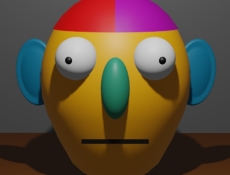
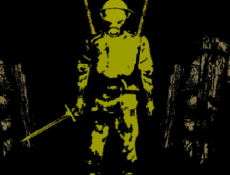
The visual style of Gore In Crayon is intentionally minimal. Characters and environments are clearly readable, which supports fast recognition during tense moments. The lack of visual clutter keeps attention on movement and positioning rather than interface elements. Lighting and color contrast are used functionally to define boundaries and interactive areas without explicit markers.
Comments (0)


2026
