












Gretel & Hansel Remake is structured as a narrative adventure where progress is determined by interpretation rather than instruction. The player takes control of Gretel while navigating a forest composed of isolated locations, each governed by its own internal rules. The remake integrates previously separated parts into a single sequence, allowing mechanics and story elements to evolve without resets. This continuity places emphasis on memory and consistency, as earlier actions can influence outcomes much later in the game.



Gretel & Hansel Remake
Advertisement
Advertisement
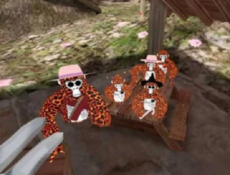






Gretel & Hansel Remake is structured as a narrative adventure where progress is determined by interpretation rather than instruction. The player takes control of Gretel while navigating a forest composed of isolated locations, each governed by its own internal rules. The remake integrates previously separated parts into a single sequence, allowing mechanics and story elements to evolve without resets. This continuity places emphasis on memory and consistency, as earlier actions can influence outcomes much later in the game.
Scene Logic and Environmental Constraints
Each scene functions as a contained problem space with limited movement and a fixed set of interactive elements. The game avoids open exploration and instead encourages close examination of what is immediately available. Objects rarely serve a single purpose, and their role may change depending on the current state of the world. Progress often requires revisiting familiar locations after new conditions have been introduced elsewhere, reinforcing a loop based on reassessment rather than discovery.
Interaction Design and Progress Mechanics
Player actions are simple in execution but complex in consequence. The game does not distinguish clearly between correct and incorrect choices, using both to advance understanding of the system. Failure frequently alters the environment or reveals information that would not appear otherwise. Central interaction patterns include:
- state-dependent object behavior
- delayed reactions to player input
- puzzles resolved through sequence rather than logic alone
- indirect control of secondary character positioning
- environmental changes triggered by repeated actions
This design shifts focus away from completion and toward comprehension of how the world responds to intervention.
Visual Structure and Information Delivery
The remake relies on layered 2D artwork to convey space and interaction boundaries. Depth is implied through composition rather than scale, keeping attention on functional elements within each frame. Visual feedback replaces traditional interface cues, using animation changes, color variation, or altered framing to indicate shifts in state. As a result, players must rely on observation instead of prompts to understand when an interaction has meaning.
Narrative Function and Player Responsibility
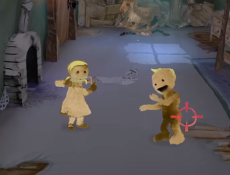
Story progression is embedded directly into gameplay systems. Dialogue is minimal and rarely explanatory, placing responsibility on the player to infer narrative context from outcomes. Gretel’s role as the primary decision-maker is reinforced mechanically, while Hansel’s responses reflect the consequences of those decisions. Character relationships are defined through dependency and limitation rather than exposition.
Comments (0)


2026
