












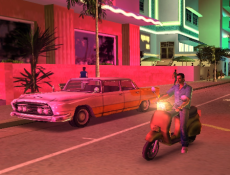
GTA Vice City is an open-world action game set in a fictional coastal city inspired by urban America of the 1980s. The player controls Tommy Vercetti, a character navigating a criminal environment shaped by power struggles, business interests, and personal ambition. The game is structured around free exploration combined with story-driven missions that gradually unlock new parts of the city. Progress is not strictly linear, allowing players to engage with activities beyond the main storyline.



GTA Vice City
Advertisement
Advertisement






GTA Vice City is an open-world action game set in a fictional coastal city inspired by urban America of the 1980s. The player controls Tommy Vercetti, a character navigating a criminal environment shaped by power struggles, business interests, and personal ambition. The game is structured around free exploration combined with story-driven missions that gradually unlock new parts of the city. Progress is not strictly linear, allowing players to engage with activities beyond the main storyline.
City Layout And Exploration
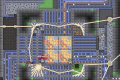
The city in GTA Vice City is divided into distinct districts that become accessible as the story advances. Each area has its own layout, traffic patterns, and points of interest. Players can move freely on foot or use a wide range of vehicles to travel across the map. Exploration is supported by optional side activities, hidden items, and environmental details that encourage roaming beyond mission objectives. The city functions as a central system where movement and interaction shape the overall experience.
Mission Design And Structure
Missions in GTA Vice City are delivered through contacts connected to different parts of the city’s criminal network. Tasks range from driving and combat to timed objectives and coordination between locations. Failure usually results in restarting from a checkpoint, allowing players to retry without long interruptions. As the story progresses, missions become more complex by combining multiple mechanics rather than introducing entirely new controls.
Common mission and activity types include:
- Vehicle-based objectives involving timed routes
- Combat encounters in indoor and outdoor locations
- Property-related tasks tied to business ownership
- Optional side missions such as taxi or vigilante work
- Exploration-based challenges that reward map knowledge
These activities provide variety throughout the game.
Progression And Player Agency
Progression in GTA Vice City is tied to both story completion and economic expansion. Players can purchase properties that unlock new missions and generate income. This system allows progress to continue even outside the main narrative. Player choice affects pacing, as it is possible to alternate between story missions and optional content freely. The game does not force immediate advancement, giving players control over how time is spent.
Visual Style And Audio Design
The visual design of GTA Vice City uses clear color contrast and recognizable landmarks to support navigation. Buildings, roads, and interiors are distinct enough to make orientation manageable. Audio plays a central role through licensed radio stations that accompany driving and exploration. Dialogue and sound effects provide functional feedback without interrupting gameplay flow.
Comments (0)


2026
