
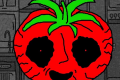







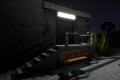
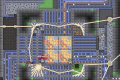
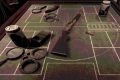
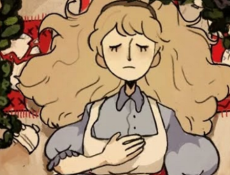
HABROMANIA is a story-focused adventure game that places the player in control of a young Alice who awakens inside an unfamiliar version of Wonderland. The setting is presented as fragmented and inconsistent, offering no direct explanation of how she arrived or what rules govern the world. Instead of traditional objectives, the game encourages players to observe, interact, and interpret events as they unfold. Progress is driven by understanding the environment and the consequences of choices rather than by linear mission completion.


HABROMANIA
Advertisement
Advertisement



HABROMANIA is a story-focused adventure game that places the player in control of a young Alice who awakens inside an unfamiliar version of Wonderland. The setting is presented as fragmented and inconsistent, offering no direct explanation of how she arrived or what rules govern the world. Instead of traditional objectives, the game encourages players to observe, interact, and interpret events as they unfold. Progress is driven by understanding the environment and the consequences of choices rather than by linear mission completion.
Exploration and World Logic
Exploration in HABROMANIA follows a point-and-click structure that allows players to move between distinct locations at a deliberate pace. Each area contains interactive objects and characters that contribute information about the world. The game avoids urgency and time-based pressure, allowing players to examine scenes carefully. Advancement often depends on noticing details or revisiting locations with new context, reinforcing a sense of continuity across different parts of Wonderland.
Choice Systems and Player Agency
Player agency is central to how HABROMANIA develops. Decisions made during conversations or interactions are tracked over time and influence future options. The game relies on several interconnected systems to manage this structure:
- Dialogue choices that affect character responses
- Environmental puzzles based on observation and logic
- Items that unlock optional interactions or information
- A behavioral tracking system reflecting player decisions
- Branching narrative paths shaped by accumulated actions
These systems work together to ensure that choices have lasting impact rather than serving as isolated moments.
Characters and Narrative Development
Characters in HABROMANIA are designed to react dynamically to the player’s behavior. Rather than offering clear guidance, they often present partial or subjective perspectives on events. Conversations may contradict each other, requiring players to evaluate information carefully. The narrative progresses through these interactions, with story elements revealed gradually through dialogue, discovered items, and environmental cues. There is no single authoritative explanation, and meaning emerges through player interpretation.
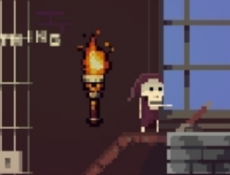
The visual presentation of HABROMANIA emphasizes symbolic design over realism. Environments are stylized to reflect emotional or thematic states rather than physical logic. Animations are limited and purposeful, supporting interaction without drawing attention away from dialogue or puzzles. Sound design is restrained and used to underline transitions or important moments instead of creating constant background presence.
Comments (0)


2026
