
















Imposter
Advertisement

Advertisement





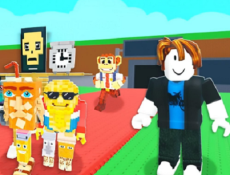


Imposter is a multiplayer social deduction game built around hidden roles and player interaction. Each match places participants in a shared environment where one or more players secretly take on the role of the imposter. The remaining players act as regular members who must complete tasks and identify the threat. The core tension comes from uncertainty, as players rely on observation and communication rather than direct information. Rounds are short, which allows repeated play with different outcomes.
Roles And Match Structure
At the start of a match, roles are assigned randomly and kept hidden. Regular players focus on moving around the map and completing assigned objectives, while the imposter works to disrupt progress without being detected. The imposter has access to actions that regular players do not, but using them openly increases suspicion. Matches progress until either all objectives are completed or the imposter eliminates enough players to gain control. This structure creates constant pressure on both sides.
Tasks, Movement, And Observation
Tasks in Imposter are simple interactions spread across the map. Completing them requires movement and brief focus, which creates opportunities for the imposter to act unnoticed. Players must balance task efficiency with awareness of their surroundings. Observing movement patterns, timing, and player behavior becomes more important than mechanical skill. Suspicious actions often lead to discussions and accusations.
In the middle of gameplay, players usually focus on:
- Completing tasks efficiently
- Watching player movement and behavior
- Avoiding isolated areas
- Gathering information for discussions
Meetings And Decision-Making
When a meeting is triggered, players discuss recent events and share observations. Decisions are made collectively, often through voting systems. Communication quality directly affects outcomes, as false assumptions can remove innocent players. The imposter may attempt to redirect blame or remain silent to avoid attention. These moments shift the game from action to analysis, making social interaction a central mechanic.
Map Design And Game Flow
Maps in Imposter are designed with multiple paths and enclosed spaces. This layout supports both cooperation and deception. Visibility is limited, which prevents players from having complete information at all times. Movement speed and task placement influence pacing, ensuring that rounds do not stall. Each match follows the same rules but unfolds differently based on player behavior.
Replay Value And Player Interaction
Replay value in Imposter comes from unpredictable social dynamics rather than changing mechanics. Different groups create different play patterns, even on the same map. Since roles are randomized, no two matches are identical. Over time, players improve at reading behavior and managing suspicion. Engagement is driven by interaction, discussion, and adaptation rather than progression systems or unlockable content.