














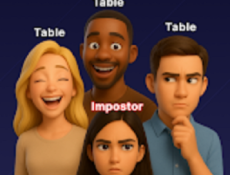
Imposter WHO? is a party-style deduction game that relies entirely on communication and reasoning. Each session places players into a shared round where information is unevenly distributed. Most participants receive the same secret word, while one player does not. From that moment, the round becomes an exercise in observation, interpretation, and controlled expression rather than quick reactions or mechanical skill.



Imposter WHO?
Advertisement
Advertisement









Imposter WHO? is a party-style deduction game that relies entirely on communication and reasoning. Each session places players into a shared round where information is unevenly distributed. Most participants receive the same secret word, while one player does not. From that moment, the round becomes an exercise in observation, interpretation, and controlled expression rather than quick reactions or mechanical skill.
Round Setup And Hidden Information
At the beginning of a round, roles are assigned privately. Players who receive the word understand the general theme and must signal that knowledge indirectly. The imposter starts with no context and must gather information by listening carefully to others. Since no one knows who holds which role, early interactions tend to be cautious. Every player must contribute, which prevents the imposter from staying silent and forces active participation.
Clue Creation And Group Awareness
Each player gives a brief clue related to the secret word. These clues must be accurate but not explicit, as revealing too much can help the imposter. At the same time, overly vague clues can raise suspicion. Players constantly evaluate how well others’ clues align with the shared concept. The imposter adapts by echoing patterns and using safe, general language based on previous answers.
Typical actions during this phase include:
- selecting words that fit a broad theme
- listening for repeated ideas or contradictions
- adjusting language to match group tone
- avoiding clues that reveal the exact word
- remembering who said what in earlier turns
Discussion Phase And Elimination
Once enough clues are shared, the game shifts into open discussion. Players explain their reasoning, question inconsistencies, and highlight patterns they noticed. The imposter may attempt to redirect attention or accuse others to create confusion. After discussion, the group votes to eliminate one player. This moment determines whether the informed group or the imposter gains the advantage.
Strategic Differences Between Roles
Players with the word benefit from subtle alignment. Staying too similar can look coordinated, while being too different can seem suspicious. The imposter’s strategy focuses on blending in without committing to specifics. Success often depends on timing—knowing when to speak confidently and when to remain neutral.
Comments (0)


2026
