










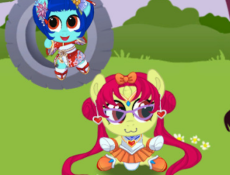
Joy Pony is a virtual care simulation where the player is responsible for raising and maintaining a pony over time. The game begins with a basic setup in which the pony requires constant attention to survive and develop. The player interacts directly with the character by responding to its needs, which change depending on time and previous actions. There is no fixed ending, and the experience is built around continuous interaction rather than progression through traditional levels or missions.



Joy Pony
Advertisement
Advertisement

Joy Pony is a virtual care simulation where the player is responsible for raising and maintaining a pony over time. The game begins with a basic setup in which the pony requires constant attention to survive and develop. The player interacts directly with the character by responding to its needs, which change depending on time and previous actions. There is no fixed ending, and the experience is built around continuous interaction rather than progression through traditional levels or missions.
Core Interaction Model
The gameplay structure of Joy Pony is based on a repeating cycle of care actions. The pony has several condition indicators that represent its current state. When one of these indicators drops, the player must take the appropriate action to restore balance. This system encourages frequent monitoring and creates a steady rhythm of interaction. The game does not rely on fast reactions or complex controls, making it accessible to a wide range of players.
Daily Activities and Systems
Most of the player’s time is spent performing routine tasks that directly affect the pony’s condition. These tasks form the foundation of the gameplay loop and determine how the pony behaves over time. In the middle of the experience, the player typically focuses on managing the following actions:
- Feeding the pony to maintain energy
- Cleaning the pony to keep it in a stable condition
- Interacting through simple activities to reduce inactivity
- Allowing rest periods to avoid negative states
These systems work together and require balance, as ignoring one aspect can lead to visible changes in the pony’s behavior.
Progression Without Levels
Joy Pony does not use a traditional level system or score tracking. Progress is instead represented through time and the pony’s development. As care continues, the pony may visually change or unlock minor interaction options, depending on the version being played. This approach places emphasis on responsibility rather than achievement, shifting the focus from winning to maintaining stability over long sessions.
The game is often played in short sessions, with players returning periodically to check on the pony’s status. Its design supports casual engagement rather than extended playtime. Joy Pony fits into the category of virtual pet simulations that prioritize simple mechanics and repetition. By centering the experience on continuous care, the game creates a straightforward system that relies on consistency rather than complexity.
Comments (0)


2026
