













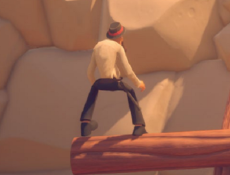
As a cooperative platformer, Log Riders focuses on two players balancing on a single rolling log while navigating through obstacle-based levels. The objective is to move forward without losing control, which requires both players to coordinate their actions. Each movement affects the log’s rotation and speed, making even simple sections dependent on timing and balance. The game is structured around repeated attempts, where players gradually improve through practice.



Log Riders
Advertisement
Advertisement







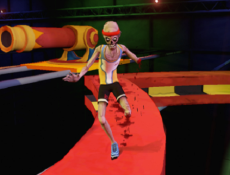

As a cooperative platformer, Log Riders focuses on two players balancing on a single rolling log while navigating through obstacle-based levels. The objective is to move forward without losing control, which requires both players to coordinate their actions. Each movement affects the log’s rotation and speed, making even simple sections dependent on timing and balance. The game is structured around repeated attempts, where players gradually improve through practice.
Level Design And Progression
The levels are built with increasing complexity and introduce new mechanics over time. Early stages allow players to understand basic balance, while later ones include moving platforms, narrow paths, and sudden gaps. Each obstacle requires a different approach, forcing players to adapt their movement.
There is no linear story progression, and the focus remains on completing levels. Checkpoints may be included to reduce the need to restart entirely. Players learn by observing how the log reacts to their inputs in different situations.
Movement And Physics Interaction
The core mechanic is based on shared control of the log. Each player influences one side, which creates a constant need for coordination. Movement must be controlled to avoid sudden shifts that can cause instability.
- Moving together increases forward speed
- Opposite movement helps stabilize balance
- Sharp inputs can disrupt control
- Timing is important when crossing obstacles
Understanding how physics affects motion helps reduce mistakes during gameplay.
Strategy And Team Coordination
Effective play depends on communication and consistency. Players should plan movements in advance and avoid reacting independently. Small adjustments are often more effective than large corrections, especially in tight sections.
Log Riders rewards teams that maintain steady coordination. As levels become more difficult, players must respond faster while keeping control. Repeated play improves synchronization, allowing players to handle complex obstacles and complete stages with fewer errors.
Comments (0)


2026
