









Mewgenics is a turn-based tactical roguelike centered on squad management and genetics-driven progression. Developed by Edmund McMillen and Tyler Glaiel, the game combines grid-based combat with persistent character systems. Players control teams of cats that participate in procedural encounters where movement, positioning, and ability usage determine outcomes. The design avoids linear mission structures, instead relying on repeated runs connected through long-term development mechanics.



Mewgenics
Advertisement
Advertisement







Tactical Systems and Encounter Design
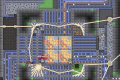
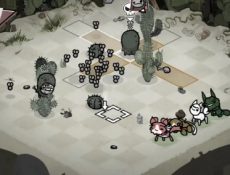
Combat scenarios in Mewgenics take place on procedurally generated grids. Each encounter introduces variable layouts, enemy configurations, and environmental modifiers. Cats function as tactical units with defined attributes governing mobility, attacks, and special abilities. Decision-making is structured around turn sequencing, where players evaluate positioning and action efficiency. Enemy behavior and map structure influence strategy, requiring adaptation rather than memorization of fixed patterns.
Unit Development and Gameplay Mechanics
Character progression is defined through multiple interconnected systems. Cats possess adjustable properties that shape their function in combat. Core mechanics include:
- Turn-based movement and action economy
- Class-based abilities and specialization
- Equipment and item allocation
- Status effects and passive modifiers
- Trait inheritance through breeding
These systems collectively determine squad effectiveness and tactical flexibility.
Genetics and Breeding Mechanics
Between encounters, players manage cats within a base environment. Breeding systems allow new units to inherit attributes and traits derived from parent characters. Genetic combinations influence statistics, abilities, and passive effects. This framework introduces variability into long-term planning, as lineage decisions directly affect future squad composition. Breeding outcomes function as a persistent progression mechanic rather than a cosmetic feature.
Gameplay Loop and Long-Term Structure
Mewgenics operates through an iterative gameplay loop. Tactical missions generate resources and development opportunities that feed into customization and breeding systems. Procedural encounter generation ensures variation across sessions. Replayability emerges from experimenting with squad configurations, genetic combinations, and equipment strategies. The absence of rigid progression paths allows players to define their own development priorities. Mewgenics functions as a systems-oriented experience where tactical decision-making, unit management, and genetics mechanics collectively shape long-term engagement.
Comments (0)


2026
