








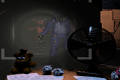


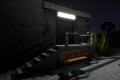
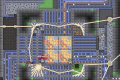
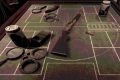
Midnight At Starstage is a survival horror game where the player takes on the role of a night guard inside a closed entertainment venue. The gameplay is focused on monitoring different areas of the building while preventing hostile entities from reaching the office. The player remains in a fixed location and interacts with surrounding systems to control access points and observe activity. The objective is to survive each shift until morning without being caught.



Midnight At Starstage
Advertisement

Advertisement

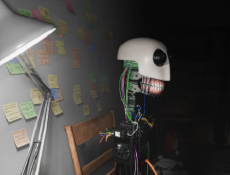

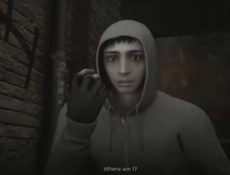
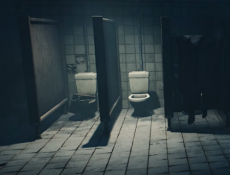
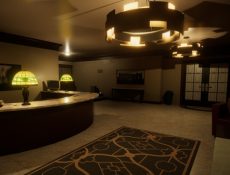

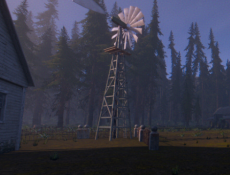
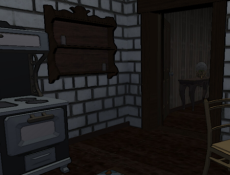
Midnight At Starstage is a survival horror game where the player takes on the role of a night guard inside a closed entertainment venue. The gameplay is focused on monitoring different areas of the building while preventing hostile entities from reaching the office. The player remains in a fixed location and interacts with surrounding systems to control access points and observe activity. The objective is to survive each shift until morning without being caught.
Monitoring And Control Systems
The player relies on a camera network to observe multiple rooms across the facility. Each camera provides a different angle, allowing the player to track movement and identify potential threats. Switching between views is essential for maintaining awareness of all areas.
In addition to cameras, the player has access to control mechanisms such as doors or barriers. These tools are used to block incoming threats when they approach. However, activating them often consumes limited resources, requiring careful timing and restraint in their use.
Resource Management And Decision Making
A central aspect of Midnight At Starstage is managing limited resources tied to the monitoring system. Every action, including camera usage and defensive measures, contributes to overall consumption. If resources are depleted, critical systems may become unavailable.
Key gameplay elements include:
- monitoring multiple camera feeds
- controlling entry points to block threats
- managing limited system resources
- reacting to visual and audio cues
- restoring systems when they fail
These mechanics create a cycle of observation and response.
Threat Patterns And Adaptation
Hostile entities follow defined movement patterns that must be learned over time. Some approach directly, while others require specific conditions before becoming dangerous. The player must recognize these patterns and respond accordingly.
Audio cues provide additional information about enemy position. Sounds such as footsteps or environmental changes help determine where threats are located without constant camera switching. Adapting to these signals improves efficiency and reduces unnecessary resource use.
Progression And Increasing Complexity
The game is divided into multiple nights, each introducing new challenges. Additional enemies and mechanics appear as the player advances, increasing the difficulty of managing all systems simultaneously. Early stages focus on basic survival, while later stages require faster reactions and better planning.
Progression depends on understanding how all elements interact. Mistakes often occur when attention is divided or resources are misused. Each completed night builds familiarity with the system and improves overall performance.
Comments (0)


2026
