












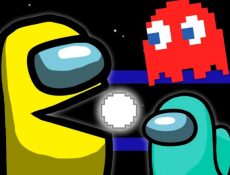
Pac-Man Among Us is a crossover-style arcade game that combines maze-based movement with elements inspired by social deduction gameplay. The core idea is built around navigating enclosed areas while avoiding enemies, collecting items, and reacting to changing conditions inside the level. The game blends familiar mechanics from classic arcade titles with modern visual references, creating an experience that feels recognizable while still functioning as its own standalone concept.



Pac-Man Among Us
Advertisement
Advertisement




Core Gameplay Structure
The gameplay of Pac-Man Among Us centers on movement through maze-like environments filled with obstacles and paths. The player controls a character that must travel through the map while avoiding hostile figures and collecting required objects. Unlike traditional maze games, movement often feels more dynamic, as enemy behavior can change depending on player position or progress. The goal is not only to survive but also to complete objectives placed throughout the level.
Mechanics And Player Interaction
The game relies on simple controls but demands attention and timing. Players must quickly decide which paths are safe and which may lead to danger. As the game progresses, the pace increases, making reaction time more important. Several mechanics shape how each level plays out:
- Navigating corridors while avoiding enemies
- Collecting items placed across the map
- Reacting to sudden changes in enemy movement
- Using timing to escape tight spaces
- Completing objectives to unlock new areas
These mechanics work together to create a loop that rewards awareness rather than memorization.
Level Design And Movement Flow
Levels in Pac-Man Among Us are designed to encourage constant motion. The layout often includes narrow corridors, intersections, and open zones that force players to make quick decisions. Enemy placement is designed to limit safe paths, pushing the player to stay alert. Unlike traditional arcade games where patterns repeat, movement here feels less predictable, which adds tension to each run. The balance between open space and tight corridors keeps gameplay active without overwhelming the player.
Visual Style And Presentation
The visual style is simple and readable, allowing players to clearly distinguish between the player character, enemies, and interactive elements. Colors are used to highlight movement paths and danger zones, helping players make quick decisions. Animations remain minimal so that attention stays focused on navigation rather than visual effects. This approach keeps the game accessible while maintaining a consistent look across all levels.
Comments (0)


2026
