











Perfect Landing Plane Pilot is a flight control game focused on managing an aircraft during approach and landing phases rather than full-scale aviation simulation. The player takes responsibility for guiding a plane through the air and bringing it down safely under changing conditions. Gameplay is session-based, with each attempt ending when the aircraft crashes or successfully completes its landing objective. The core emphasis is on control precision and understanding how small input changes affect the plane’s movement.



Perfect Landing Plane Pilot
Advertisement
Advertisement









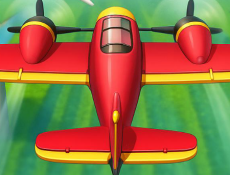
Perfect Landing Plane Pilot is a flight control game focused on managing an aircraft during approach and landing phases rather than full-scale aviation simulation. The player takes responsibility for guiding a plane through the air and bringing it down safely under changing conditions. Gameplay is session-based, with each attempt ending when the aircraft crashes or successfully completes its landing objective. The core emphasis is on control precision and understanding how small input changes affect the plane’s movement.
Flight Control and Core Mechanics
In Perfect Landing Plane Pilot, the player interacts with simplified flight mechanics that prioritize responsiveness over realism. Control inputs affect pitch, direction, and descent rate, requiring constant adjustment during flight. The environment presents obstacles, changing terrain, or runway alignment challenges that force players to react quickly. Because the game does not automate stabilization, maintaining balance becomes the primary task throughout each session. Success depends on smooth input rather than rapid or aggressive movement.
Landing Evaluation and Scoring Logic
Landing quality plays a central role in progression. The game evaluates how accurately and smoothly the aircraft touches down, often taking into account alignment, speed, and impact force. Poor landings may result in crashes or low scores, while controlled descents are rewarded. This scoring logic encourages players to focus on consistency rather than speed alone. Each attempt provides immediate feedback, allowing players to adjust technique in the next run.
Several recurring elements influence performance during play:
- Managing descent speed to avoid hard impacts
- Aligning the aircraft with the runway or landing zone
- Correcting direction drift during approach
- Responding to obstacles or terrain changes
These factors define the challenge and guide player improvement.
Progression and Upgrade Systems
Progression in Perfect Landing Plane Pilot is usually tied to repeated attempts and accumulated rewards. Currency or points earned from successful flights can be invested in upgrades that modify aircraft handling. Improvements may include better control responsiveness, increased stability, or reduced sensitivity to errors. These upgrades do not remove the need for skill but provide more tolerance for mistakes, helping players reach more advanced stages of the game.
Accessibility and Session Design
The game is designed for accessibility across platforms, commonly playable in a web browser or on mobile devices. Controls are intentionally minimal, often relying on simple taps or directional input. Sessions are short and repeatable, making the game suitable for quick play without long-term commitment. There are no complex menus or configuration requirements, which allows players to focus entirely on flight control.
Comments (0)


2026
