












Pineapple On Pizza is a short first-person exploration game developed by Majorariatto. The experience is structured around free movement within a contained island environment rather than traditional objectives or progression systems. Players are placed into a small, self-contained world where interaction and observation drive the overall flow. The game does not include missions, scoring mechanics, or inventory management. Instead, it relies on environmental exploration and scripted events to guide players toward its conclusion.



Pineapple on Pizza
Advertisement
Advertisement

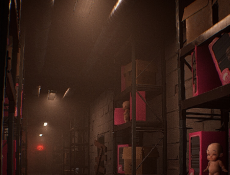


Environment and World Design
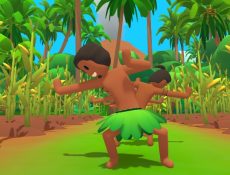
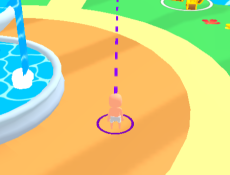
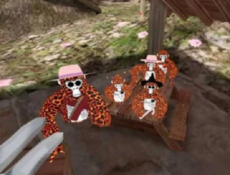
The playable space is presented as a compact island populated by animated characters. Players can move freely across the environment without restrictions tied to levels or unlockable areas. The setting functions as a continuous space where most elements are visible and accessible from the start. Characters within the world appear engaged in synchronized activities that operate independently of direct player control. Environmental interaction is limited but sufficient to influence how events unfold.
Gameplay Structure and Key Mechanics
Pineapple On Pizza uses a simplified gameplay model centered on exploration and event triggers. Core interactive elements include:
- First-person movement across the island
- Observation of character behavior
- Interaction with specific environmental objects
- Activation of scripted sequences
- Progression toward a defined ending
These mechanics form the primary loop, where movement and discovery gradually advance the experience.
Session Flow and Duration
The game is designed as a brief standalone session, typically completed within a short timeframe. Progression occurs through exploration rather than completion of tasks. Players move through the environment, observe world activity, and trigger narrative shifts by interacting with key elements. The structure remains linear in terms of outcome, though players retain freedom in how they navigate the space before reaching the ending.
Design Focus and Player Experience
Pineapple On Pizza prioritizes environmental storytelling over mechanical complexity. The experience functions as an interactive sequence rather than a challenge-based game. Player engagement is driven by curiosity, spatial exploration, and observation of world reactions. The absence of competitive systems or performance metrics allows the session to remain consistent across playthroughs. Replayability is primarily tied to revisiting the environment and re-experiencing triggered sequences rather than discovering mechanical variations.
Comments (0)


2026
