











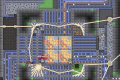

Pixel Flow is a puzzle game where the player connects pairs of colored points on a grid to create complete paths. The objective is to fill the entire board without leaving empty cells or allowing paths to overlap. Each level presents a fixed arrangement, and the solution must follow strict placement rules. The gameplay is based on logical thinking and careful planning rather than speed.



Pixel Flow
Advertisement

Advertisement









Grid-Based Logic
The core system in Pixel Flow is built on grid interaction. Players draw lines between matching colors, and each connection occupies space that cannot be reused. This creates a constraint where every move limits future options. A correct solution requires using all available cells while maintaining valid connections.
Early levels introduce simple layouts with clear paths. As the player advances, grids become larger and more complex, requiring more steps to complete. Mistakes often force players to restart and reconsider their approach.
Path Planning
Pixel Flow requires players to plan connections in advance. It is often necessary to determine which paths should be completed first to avoid blocking others. Some connections are straightforward, while others must be routed around obstacles or through narrow spaces.
Core gameplay elements include:
- linking matching colored points
- filling the grid completely without gaps
- preventing paths from crossing
- adjusting routes when space becomes limited
- retrying levels to refine solutions
These elements define how each puzzle is solved.
Increasing Complexity
As the game progresses, new challenges are introduced through more complicated layouts. Some levels include tighter spaces or arrangements that require precise sequencing. The number of possible paths increases, making it harder to identify the correct solution.
Despite these changes, the rules remain consistent. Players rely on pattern recognition and experience to handle more advanced puzzles. Each level builds on previously learned strategies.
Replay and Learning
Pixel Flow is designed for repeated attempts and gradual improvement. Players can restart levels at any time, allowing them to experiment with different approaches. There is no time limit, so focus remains on finding the correct configuration.
The structure emphasizes learning through iteration. Over time, players become more efficient at identifying viable paths and avoiding common mistakes. The gameplay loop remains consistent, centered on connecting points and optimizing space usage across increasingly complex grids.
Comments (0)


2026
