












Poppy Playtime 6 continues the episodic horror format of the series by expanding the scale of exploration and developing the story introduced in earlier chapters. The game places the player once again inside the abandoned Playtime Co. facility, where new sections of the complex become accessible. The focus remains on environmental storytelling and slow progression rather than direct action. As in previous entries, the player is not given full explanations and must rely on observation to understand what is happening within the factory.



Poppy Playtime 6
Advertisement
Advertisement








Poppy Playtime 6 continues the episodic horror format of the series by expanding the scale of exploration and developing the story introduced in earlier chapters. The game places the player once again inside the abandoned Playtime Co. facility, where new sections of the complex become accessible. The focus remains on environmental storytelling and slow progression rather than direct action. As in previous entries, the player is not given full explanations and must rely on observation to understand what is happening within the factory.
Environment And Progression Design
The structure of Poppy Playtime 6 is built around moving through connected areas that gradually open as puzzles are solved. Each location serves a specific purpose in the factory’s layout, such as production zones, storage halls, or restricted research areas. The player advances by interacting with machinery, restoring power, or unlocking pathways that lead deeper into the facility. Navigation is designed to feel intentional, with visual and audio cues guiding movement instead of explicit markers.
Core Gameplay And Interaction
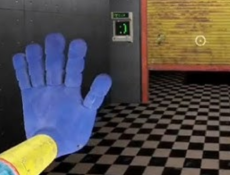
Gameplay in Poppy Playtime 6 emphasizes environmental interaction rather than combat. Players must analyze their surroundings, identify usable objects, and react to changes in the environment. The mechanics are introduced gradually to avoid overwhelming the player, while still increasing in complexity as the chapter progresses. Key activities include:
- Activating systems to unlock new areas
- Solving logic-based environmental puzzles
- Avoiding threats through timing and movement
- Exploring hidden sections of the factory
- Triggering narrative events through interaction
These mechanics are repeated in different forms, encouraging careful observation rather than fast reactions.
Atmosphere And Story Delivery
The atmosphere in Poppy Playtime 6 relies heavily on sound design, lighting, and spatial awareness. Long stretches of silence are used to build tension, while subtle background noises suggest unseen activity. Story elements are revealed indirectly through the environment, including visual details and environmental changes. This approach allows players to piece together the narrative without direct exposition, keeping the experience focused on discovery.
Comments (0)


2026
