











Rift Of The NecroDancer is a rhythm-based action game where the player defeats enemies by pressing inputs in time with music. The game is a spin-off of Crypt of the NecroDancer and shifts the gameplay into a structured lane-based system. The player controls Cadence and progresses through stages where enemies move toward the player along fixed paths. The objective is to survive each track by maintaining rhythm accuracy and reacting to enemy patterns.



Rift Of The NecroDancer
Advertisement
Advertisement








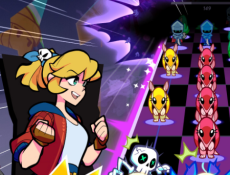
Rift Of The NecroDancer is a rhythm-based action game where the player defeats enemies by pressing inputs in time with music. The game is a spin-off of Crypt of the NecroDancer and shifts the gameplay into a structured lane-based system. The player controls Cadence and progresses through stages where enemies move toward the player along fixed paths. The objective is to survive each track by maintaining rhythm accuracy and reacting to enemy patterns.
The gameplay is centered on timing and pattern recognition. Enemies appear in three lanes and move closer with each beat of the soundtrack. The player must press the corresponding input at the correct moment to defeat them. Missing inputs results in damage, and losing all health ends the stage. Each enemy type behaves differently, requiring the player to adapt to movement patterns and attack timing.
Core Gameplay And Rhythm System
The main mechanic is synchronized input. Every action must match the tempo of the music, and each beat advances enemy movement. Players must track both rhythm and positioning, responding to multiple threats simultaneously.
Some enemies require more than one input or shift between lanes, increasing complexity. Maintaining accuracy is essential, as mistakes disrupt flow and reduce survivability. The system rewards consistency and precise timing rather than random input.
Key Features
- Three-lane rhythm combat system
- Enemies with distinct movement and attack patterns
- Multiple game modes including story and practice
- Boss encounters with different input mechanics
- Adjustable difficulty levels and remix challenges
Game Modes And Structure
The game includes a story mode where stages are completed in sequence. Each level introduces new patterns, speeds, and combinations of enemies. Between stages, narrative elements are presented, providing context for progression.
Additional modes allow players to replay individual levels or attempt remixed versions with altered enemy placement. There is also a practice mode that removes failure conditions, allowing players to focus on learning patterns and improving timing.
Boss Mechanics And Variation
Boss encounters differ from standard stages. Instead of lane-based inputs, players respond to visual cues appearing across the screen. These cues require directional inputs or timed actions to avoid attacks and counter effectively.
This variation changes the gameplay flow, requiring players to adjust from pattern tracking to reaction-based input. Boss sequences test timing under different visual formats while maintaining the rhythm foundation.
Comments (0)


2026
