












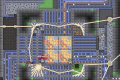

Shapez is a factory-building puzzle game centered on automation and logical design. The player’s main goal is to extract, process, and combine geometric shapes on an infinite grid. Each shape is part of a production chain that grows more complex over time. Instead of managing traditional resources, the game focuses on creating efficient systems that cut, rotate, and merge shapes into new configurations. Progress depends on building an organized network where materials move continuously without interruption.



Shapez
Advertisement
Advertisement








Shapez is a factory-building puzzle game centered on automation and logical design. The player’s main goal is to extract, process, and combine geometric shapes on an infinite grid. Each shape is part of a production chain that grows more complex over time. Instead of managing traditional resources, the game focuses on creating efficient systems that cut, rotate, and merge shapes into new configurations. Progress depends on building an organized network where materials move continuously without interruption.
Game Structure And Objectives
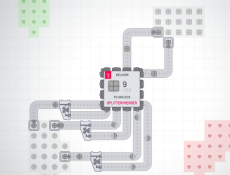
In Shapez, the player begins with a simple extractor producing one shape type. The tutorial introduces conveyor belts and basic processors used to modify or deliver shapes to a central hub. Each completed delivery unlocks new tools or building components. As the game advances, the tasks evolve from producing single shapes to combining multiple layers and colors. There is no direct failure state, but efficiency becomes the main challenge: managing transport speed, layout clarity, and production flow. The open design allows experimentation with different factory layouts.
Automation And System Design
The core of Shapez revolves around planning and optimization. Players construct production lines that automatically gather raw shapes, cut them into sections, rotate parts, and merge them into complex patterns. Automation reduces manual interaction, turning the experience into a continuous process of improvement. Once a system works, the player can duplicate or expand it to meet higher demands.
Main gameplay elements include:
- Extracting and transporting base shapes
- Using cutters, rotators, and stackers to alter form
- Combining colored layers to match requested patterns
- Optimizing production speed through layout planning
Each tool interacts with others in predictable ways, encouraging experimentation with positioning and sequencing. The simplicity of each part leads to complex results when scaled.
Expansion And Progression
As players reach new milestones, Shapez introduces additional mechanics like color mixing and layer stacking. The infinite map ensures that space never limits creativity, though long transport routes require planning. The game gradually transitions from individual construction to large-scale management. Players develop modular systems, designing reusable structures that can be adapted to new objectives.
Comments (0)


2026
