












Strange Jigsaws is a puzzle game that treats jigsaw assembly as a starting point rather than a final goal. Instead of focusing on recreating a complete picture, the game presents a series of standalone challenges, each governed by its own rules. Players are given pieces and a workspace, but the condition for success is often unclear at first. Understanding what the puzzle expects becomes part of the task itself, shifting attention toward analysis and interpretation rather than visual matching.



Strange Jigsaws
Advertisement

Advertisement


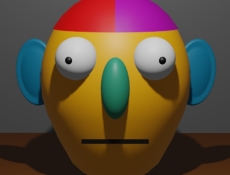
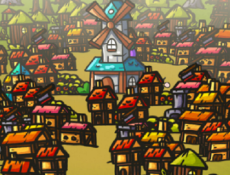
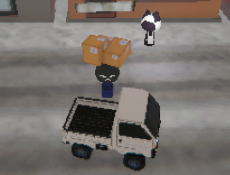


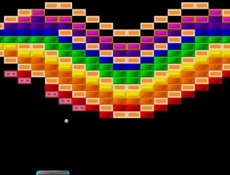
Strange Jigsaws is a puzzle game that treats jigsaw assembly as a starting point rather than a final goal. Instead of focusing on recreating a complete picture, the game presents a series of standalone challenges, each governed by its own rules. Players are given pieces and a workspace, but the condition for success is often unclear at first. Understanding what the puzzle expects becomes part of the task itself, shifting attention toward analysis and interpretation rather than visual matching.
Independent Challenges and Structure
Each puzzle in Strange Jigsaws functions independently and does not rely on knowledge from previous tasks. Some puzzles resemble traditional jigsaws but introduce constraints that change how pieces can be placed. Others remove the idea of an image entirely and rely on abstract spatial or logical relationships. The game avoids tutorials and explicit explanations, requiring players to observe how pieces behave and infer what constitutes a correct solution. Progress is driven by recognition of patterns and rules rather than linear instruction.
Interaction and Problem Solving Flow
Player interaction is limited to precise manipulation of puzzle elements. Pieces can be moved, rotated, and repositioned freely, allowing continuous experimentation. There are no penalties for incorrect attempts, which supports a methodical approach. As puzzles increase in complexity, players must often reconsider assumptions and revise partial solutions. The process encourages careful testing and adjustment instead of rapid guessing.
Across most puzzles, players repeatedly perform the following actions:
- Examining available pieces and the puzzle space
- Identifying constraints that limit placement
- Testing arrangements against implied rules
- Revising configurations after failed attempts
- Confirming when all conditions are met
This loop remains consistent even as puzzle concepts change, helping players build a stable approach to unfamiliar challenges.
Interface and Visual Organization
The interface in Strange Jigsaws is designed to support focus and clarity. Visual elements are clean, and puzzle pieces are clearly distinguishable from the background. Controls respond accurately, which is important when puzzles depend on exact alignment or positioning. There are no time limits, score counters, or animated interruptions, allowing players to concentrate entirely on the logical structure of each challenge without external pressure.
Variety of Logical Concepts
As players progress, the game introduces puzzles based on different logical ideas. Some rely on spatial balance, others on ordering, adjacency, or positional relationships. Because each puzzle introduces its own rules, no single strategy applies universally. This variety prevents repetition and requires players to adapt their thinking regularly, treating each new puzzle as a separate problem to be understood.
Session Design and Replay Value
Strange Jigsaws is designed for short, focused sessions. Puzzles can be solved in any order, and players are free to leave and return without consequence. There is no progression system tied to performance or speed. Replay value comes from revisiting puzzles to gain a clearer understanding of their rules or to approach them with a refined perspective. For players interested in logic-based challenges that emphasize structure, interpretation, and experimentation, the game offers a flexible and self-contained puzzle experience.
Comments (0)


2026
