












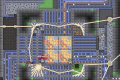

Taffy Tales is a story-driven game structured around exploration, dialogue, and player choice. The player takes control of a central character who navigates a small town environment and interacts with a defined cast of characters. Progress is achieved by completing story events and unlocking new interactions rather than through traditional action mechanics. The game is built around a branching structure where decisions influence how situations develop over time.



Taffy Tales
Advertisement

Advertisement
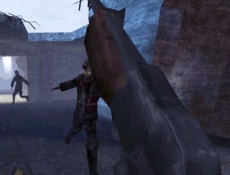

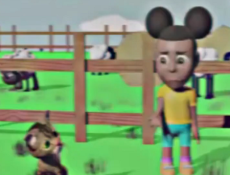





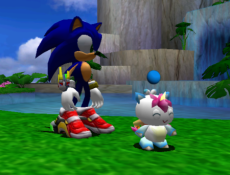
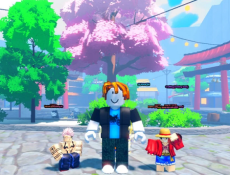
Taffy Tales is a story-driven game structured around exploration, dialogue, and player choice. The player takes control of a central character who navigates a small town environment and interacts with a defined cast of characters. Progress is achieved by completing story events and unlocking new interactions rather than through traditional action mechanics. The game is built around a branching structure where decisions influence how situations develop over time.
Narrative Structure and World Layout
The game world in Taffy Tales is divided into several locations that become accessible as the story progresses. Each area is connected to specific characters and events, encouraging the player to revisit locations as new options appear. The narrative unfolds gradually, with information revealed through conversations and scripted scenes. There is no linear mission list; instead, the player advances by paying attention to dialogue cues and contextual changes in the environment.
Character Interaction and Dialogue System
Interaction with characters is the primary method of progression. Conversations are presented through dialogue choices that can influence relationships and unlock additional scenes. The game tracks these interactions internally, allowing different outcomes depending on player decisions. In the middle of the experience, the player commonly engages in the following activities as part of normal gameplay:
- Talking to characters to unlock new dialogue paths
- Completing story-related tasks tied to specific locations
- Revisiting areas to trigger new events
- Managing choices that affect relationship states
These actions form the core loop and require the player to balance exploration with narrative attention.
Progression and Player Choice
Taffy Tales does not rely on levels or numerical statistics to represent progress. Advancement is measured through story completion and access to new scenes. Player choices can alter how characters respond and which events become available later. This system encourages replayability, as different decisions can lead to alternative story paths without changing the core mechanics of the game.
Visual Presentation and Interface
The visual style of Taffy Tales supports clarity in storytelling. Characters are clearly differentiated, and environments are designed to highlight interactive elements. The interface is minimal and focused on dialogue and navigation, reducing distractions during story scenes. Visual feedback is used to indicate available interactions rather than to guide the player explicitly.
Taffy Tales functions as a narrative-focused experience built on exploration and choice. The game avoids complex mechanical systems and instead emphasizes consistent interaction with characters and environments. Its structure rewards attention to detail and memory of previous events. By centering gameplay on dialogue and decision-making, the game provides a controlled framework where progression is defined by story development rather than skill-based challenges or resource management.
Comments (0)


2026
