







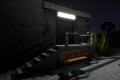
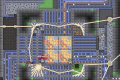
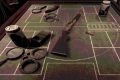
Tentacle Locker 2 can be described in abstract terms as a short-session arcade game built around timing and positional control. The player interacts with objects that emerge from fixed points on the screen and must react to moving targets within limited time windows. Each attempt is brief, with outcomes determined by precision rather than long-term accumulation. The structure is intentionally simple, allowing players to understand the rules within seconds and repeat sessions without preparation.



Tentacle Locker 2
Advertisement
Advertisement


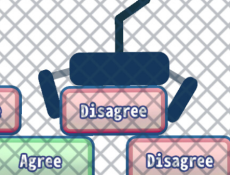


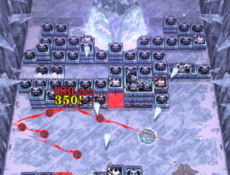

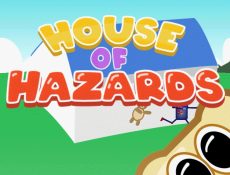
Tentacle Locker 2 can be described in abstract terms as a short-session arcade game built around timing and positional control. The player interacts with objects that emerge from fixed points on the screen and must react to moving targets within limited time windows. Each attempt is brief, with outcomes determined by precision rather than long-term accumulation. The structure is intentionally simple, allowing players to understand the rules within seconds and repeat sessions without preparation.
Core Loop and Interaction
At the start of a session, the player is presented with a static layout and moving elements that follow predictable paths. Interaction is limited to triggering actions at the correct moment, which creates a constant focus on rhythm and observation. Mistimed actions immediately end the attempt, reinforcing a trial-and-error approach. The game does not rely on tutorials or narrative explanation, instead expecting players to learn patterns through repetition.
As sessions repeat, the challenge comes from increased speed and reduced reaction margins rather than new mechanics. The player’s success depends on recognizing movement cycles and committing to actions without hesitation. Because each attempt resets instantly, the design favors experimentation over caution. Progress is measured by consistency rather than completion of a defined objective.
Structure and Progression
Progression in Tentacle Locker 2 is minimal and mostly tied to player familiarity. There are no complex upgrade trees or persistent statistics that alter gameplay. Instead, variation is introduced through different layouts and timing rules. This keeps the focus on execution rather than preparation, making each session self-contained.
Key structural elements include:
- Fixed interaction points that define possible actions
- Moving targets with repeatable patterns
- Short failure states that reset instantly
- Increasing speed as the main difficulty factor
These elements work together to maintain a uniform experience across sessions while still allowing difficulty to scale.
Difficulty and Repetition
Difficulty increases through pacing rather than complexity. As targets move faster, the player has less time to react, making mistakes more likely. This approach ensures that the rules remain constant while the demand on attention grows. The absence of randomness means that improvement comes from learning rather than chance.
The repetitive nature of the game is intentional. By limiting variation, Tentacle Locker 2 encourages players to refine timing and decision-making. Each failure provides immediate feedback, making it clear where the mistake occurred. This loop supports short play sessions without long-term commitment.
In abstract form, Tentacle Locker 2 functions as a reaction-based arcade game focused on precision and repetition. It avoids layered systems and instead relies on consistent rules, fast resets, and escalating pace. The experience is defined by how quickly the player adapts to pressure rather than by progression systems or narrative structure.
Comments (0)


2026
