














Toy Story Flash Games describe a group of browser-based games created during the period when Adobe Flash was widely used for online entertainment. These titles were inspired by the Toy Story universe and focused on short, accessible gameplay sessions. Instead of complex narratives or long progression systems, the games emphasized immediate interaction with recognizable characters and environments. Players could start a game quickly and understand its purpose without tutorials or extended instructions.



Toy Story Flash Games
Advertisement
Advertisement



Toy Story Flash Games describe a group of browser-based games created during the period when Adobe Flash was widely used for online entertainment. These titles were inspired by the Toy Story universe and focused on short, accessible gameplay sessions. Instead of complex narratives or long progression systems, the games emphasized immediate interaction with recognizable characters and environments. Players could start a game quickly and understand its purpose without tutorials or extended instructions.
Structure And Game Design
Most Toy Story Flash Games were designed around compact levels or single-screen challenges. The structure supported brief play sessions, making the games suitable for casual use. Objectives were usually clear from the beginning, such as reaching an endpoint, completing a task, or avoiding obstacles. The design favored repetition and replay rather than story development, allowing players to retry levels easily after failure. This approach matched the technical and performance limitations of Flash-based browser games.
Mechanics And Repeated Patterns
Although individual games differed, many Toy Story Flash Games shared similar mechanical foundations. These recurring patterns defined how players interacted with the content:
- Movement using directional input
- Jumping or basic action commands
- Collecting items linked to progress or score
- Avoiding hazards or simple enemy behavior
- Completing a level or task to end the session
These mechanics were intentionally straightforward, ensuring that players of different ages could participate without difficulty.
Control Schemes And Accessibility
Control schemes in Toy Story Flash Games were kept consistent across titles. Keyboard input was the most common method, with arrow keys handling movement and one or two additional keys used for actions. Some games relied on mouse interaction, particularly in puzzle-oriented formats. This simplicity reduced the learning curve and ensured compatibility across different systems. Because Flash games needed to run smoothly in browsers, controls avoided complexity and responded immediately to input.
Visual Representation And Characters
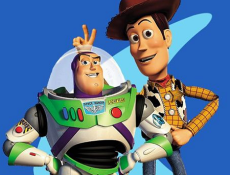
The visual style of Toy Story Flash Games reflected the technical constraints of the Flash platform. Characters were represented using two-dimensional sprites rather than detailed models. Despite this, designers aimed to preserve recognizable traits such as clothing, color schemes, and proportions. Backgrounds referenced familiar locations from the films, helping players quickly identify the setting. Visual clarity was prioritized over detail to maintain performance and readability during gameplay.
Comments (0)


2026
