








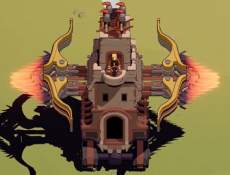
Wander Burg is a roguelike game built around the concept of a traveling stronghold that moves across a hostile landscape. The player does not control a character in the traditional sense, but instead manages a structure that grows during the session. The gameplay focuses on collecting resources, surviving encounters, and shaping the fortress through upgrades. Each run is self-contained, with progress reset after failure but long-term unlocks influencing future attempts.



Wander Burg
Advertisement
Advertisement

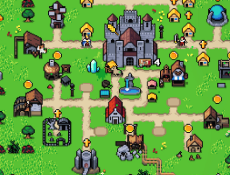

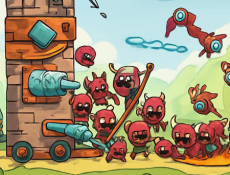
Wander Burg is a roguelike game built around the concept of a traveling stronghold that moves across a hostile landscape. The player does not control a character in the traditional sense, but instead manages a structure that grows during the session. The gameplay focuses on collecting resources, surviving encounters, and shaping the fortress through upgrades. Each run is self-contained, with progress reset after failure but long-term unlocks influencing future attempts.
Control Model And Combat Flow
Movement is the central form of control. The player directs the fortress across the map while its installed systems handle attacks and defense. Combat occurs in real time and depends on how the player positions the structure relative to enemies.
Instead of direct attacks, the game relies on indirect control. Weapons fire automatically or activate based on placement, which means that timing and positioning determine effectiveness. This shifts the focus toward planning rather than reaction speed.
Development And Structural Choices
As the session progresses, the fortress can be expanded with new components. These elements define the playstyle, as different combinations lead to different combat behaviors. Some builds emphasize offense, while others focus on durability or resource efficiency.
- Attaching modules that alter performance
- Choosing between immediate upgrades or saving resources
- Adjusting structure layout for better coverage
- Combining systems for specific strategies
- Scaling power through continuous expansion
World Layout And Risk Balance
The environment is generated differently in each run, with varied enemy positions and resource points. This prevents repetition and requires players to evaluate each situation independently. Exploration is flexible, allowing different routes depending on player preference.
Risk increases as the player moves further from starting areas. Stronger enemies appear, but they also provide better rewards. This creates a balance where progression depends on how much risk the player is willing to take.
Visual Language And Feedback
The game uses a clean visual style with clear contrasts between elements. The fortress, enemies, and resources are easy to identify, which is important during active encounters. Visual effects are used mainly to indicate actions such as attacks or damage.
The interface is limited to essential information. Players can monitor status and resources without navigating complex menus, allowing continuous focus on gameplay.
Comments (0)


2026
