








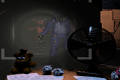

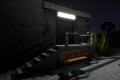
We Gotta Go is a cooperative horror game where players are placed in an enclosed interior space and given a single shared objective that determines the pace of the entire session. The game is played from a first-person perspective and focuses on group movement rather than individual action. From the beginning, players are required to navigate unfamiliar rooms while monitoring a condition that limits how long they can afford to explore. Every decision affects the team as a whole, and mistakes cannot easily be corrected once momentum is lost.



We Gotta Go
Advertisement

Advertisement



We Gotta Go is a cooperative horror game where players are placed in an enclosed interior space and given a single shared objective that determines the pace of the entire session. The game is played from a first-person perspective and focuses on group movement rather than individual action. From the beginning, players are required to navigate unfamiliar rooms while monitoring a condition that limits how long they can afford to explore. Every decision affects the team as a whole, and mistakes cannot easily be corrected once momentum is lost.
Environment And Navigation Logic
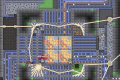
The playable area is structured as a network of rooms and corridors that changes between sessions. Paths may be blocked, redirected, or extended depending on the layout generated at the start of a run. Lighting is limited, forcing players to rely on tools or shared positioning to maintain orientation. Movement through the environment is rarely linear, and reaching the destination often requires detours that introduce additional risk. Players must constantly balance exploration against forward progress.
Pressure And Interaction Systems
Several interconnected systems operate simultaneously and shape player behavior throughout the game. These mechanics are simple in isolation but demanding when combined under time pressure.
- shared time-based failure condition
- limited visibility across most locations
- interactive objects with temporary effects
- obstacles that require more than one player
- environmental threats that interrupt movement
The presence of these systems ensures that hesitation and poor coordination have immediate consequences. Teams must communicate clearly and adapt their approach as conditions change during the run.
Cooperative Structure And Dependence
We Gotta Go is designed so that cooperation is mandatory rather than optional. Certain interactions cannot be completed alone, and players who separate from the group often lose access to critical paths or information. Audio cues and partial visual feedback reinforce the need to stay within range of teammates. The game does not assign formal roles, but practical roles emerge naturally based on position, item availability, and situational awareness.
Replay Value And Learning Curve
Each session ends either in completion or failure, with little emphasis on progression outside of player experience. Because layouts and events vary, repeated runs do not rely on memorization. Instead, players improve by refining communication, recognizing environmental patterns, and managing movement more efficiently. Failure becomes part of the learning process rather than a setback, encouraging repeated attempts with the same group.
Comments (0)


2026
