







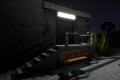
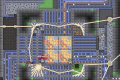
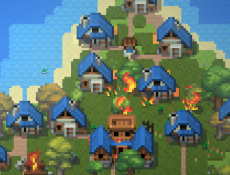
WorldBox is a sandbox simulation game where the player observes and influences a procedurally generated world. The game does not assign fixed goals or victory conditions. Instead, it provides tools that allow the player to create terrain, place creatures, and trigger events that affect how the world develops over time. Civilizations form, expand, and interact based on simple rules, while the player decides how much to intervene or simply observe the outcomes.


WorldBox
Advertisement
Advertisement




WorldBox is a sandbox simulation game where the player observes and influences a procedurally generated world. The game does not assign fixed goals or victory conditions. Instead, it provides tools that allow the player to create terrain, place creatures, and trigger events that affect how the world develops over time. Civilizations form, expand, and interact based on simple rules, while the player decides how much to intervene or simply observe the outcomes.
World Creation And Core Systems
At the start, the player creates landmasses, oceans, and climate zones using basic tools. Terrain type directly affects how settlements grow and how units move across the map. Once creatures are placed, they begin acting independently, forming villages, gathering resources, and expanding territory. The simulation runs continuously, and small changes can have long-term effects. This structure encourages experimentation rather than optimization.
Civilizations And Autonomous Behavior
Civilizations in WorldBox develop without direct control. They build houses, create armies, and engage in conflicts based on proximity and resources. Population growth, hunger, and warfare are handled by the simulation. The player can influence outcomes by adding or removing elements, but cannot issue direct commands. Observing how different races and settlements react to the same environment is a central part of gameplay.
In the middle of play, players often interact with systems such as:
- Placing races, animals, and creatures
- Modifying terrain and climate conditions
- Triggering natural disasters or events
- Adjusting world rules and simulation speed
Powers, Events, And Interaction Tools
WorldBox provides a wide set of tools that act as powers rather than traditional controls. These include weather effects, environmental changes, and destructive events. Using these tools can reshape continents or reset entire civilizations. Each action immediately affects the simulation, allowing players to test cause-and-effect relationships. The absence of limits encourages repeated use and experimentation.
Time Progression And Observation
Time can be adjusted to speed up or slow down world development. This allows players to observe short-term reactions or long-term evolution. As centuries pass, civilizations rise and fall, borders shift, and landscapes change. The player’s role often becomes observational, watching how earlier decisions influence later outcomes. This focus on time highlights patterns rather than individual moments.
Replay Value And Open-Ended Structure
Replay value in WorldBox comes from its open-ended design. Every world starts differently based on terrain, population placement, and player actions. There is no defined endpoint, so sessions can end and restart at any moment. Over time, players return to explore new scenarios, test different interactions, or simply observe the simulation unfold without interference.
Comments (0)


2026
