

















In Hungry Knight, the player is placed in a confined combat space with a single requirement: remain active to survive. The game removes traditional progression elements and instead builds its structure around a continuous timer that limits how long the character can stay alive without interaction. Created by Team Cherry, it represents a focused experiment in fast decision-making and mechanical control.



Hungry Knight
Advertisement
Advertisement


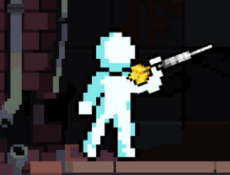




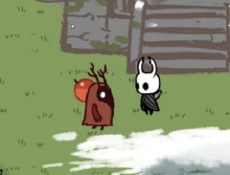
In Hungry Knight, the player is placed in a confined combat space with a single requirement: remain active to survive. The game removes traditional progression elements and instead builds its structure around a continuous timer that limits how long the character can stay alive without interaction. Created by Team Cherry, it represents a focused experiment in fast decision-making and mechanical control.
Time Pressure As Core Mechanic
The defining system is a hunger timer that constantly decreases. To extend survival, the player must defeat enemies and collect the food they drop. This creates a direct link between combat and time management. Movement is unrestricted within the arena, but stopping or delaying actions quickly leads to failure. A dash ability allows rapid movement between targets and helps maintain efficiency during encounters.
Arena Dynamics And Enemy Roles
All enemies function as both obstacles and essential resources. The player must engage them regularly, as avoiding combat leads to starvation. Boss enemies appear as key objectives and require more controlled execution. Their defeat provides temporary stability but does not remove the ongoing pressure. Since there are no stored resources, each encounter must be handled in real time.
- Constantly decreasing survival timer
- Enemy drops used to restore the timer
- Boss encounters required for completion
- Dash movement supporting fast navigation
- Single arena with repeated enemy cycles
Session Format And Difficulty Scaling
Hungry Knight is structured as a single-run experience without checkpoints. The environment remains consistent, allowing players to learn patterns and improve efficiency across attempts. After completing the main objective, an additional difficulty mode becomes available, reducing the available time for survival actions.
The game is typically accessed through browser platforms, making it available without installation. Its limited feature set reflects its origin as a prototype, but it introduces mechanics later developed in Hollow Knight. The emphasis stays on maintaining action, reacting to enemy behavior, and managing time constraints.
Comments (0)


2026
