

























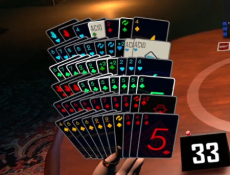
Cheater’s Table is a social card game for two to four players built around bluffing, cheating, and catching opponents who break the rules. Everyone sits around the same table and tries to empty their hand while staying alive. Unlike a normal card game, players are allowed to secretly hide cards in a sleeve or pant leg and bring them back when they need them. Other players can challenge suspicious actions, but accusing someone incorrectly can be just as dangerous as getting caught cheating.



Cheaters Table Steam PNG
Advertisement
Advertisement












Cheater’s Table is a social card game for two to four players built around bluffing, cheating, and catching opponents who break the rules. Everyone sits around the same table and tries to empty their hand while staying alive. Unlike a normal card game, players are allowed to secretly hide cards in a sleeve or pant leg and bring them back when they need them. Other players can challenge suspicious actions, but accusing someone incorrectly can be just as dangerous as getting caught cheating.
Hide Cards Without Getting Caught
A player may secretly remove a card from their hand and conceal it before using it later. This is particularly useful when the card does not match what can normally be played. Opponents can watch for suspicious movements and call out a possible cheat. If the accusation is correct, the cheater receives the punishment. If no cheating actually happened, the accuser takes the consequences instead. This makes deliberately suspicious behavior useful as a bluff.
Traps add another layer to these confrontations. A player can make an action appear like cheating specifically to tempt someone into challenging it. Falling for the trap causes the challenger to suffer, while ignoring certain traps can make them backfire on the person who created them.
Punishments and Special Rules
The table can become increasingly unpredictable because different punishments and rules can be enabled for a match. Important mechanics include:
- Cards that must be emptied from the hand
- Hidden cards stored in sleeves or pant legs
- Challenges against suspected cheaters
- Traps designed to provoke false accusations
- Dynamite punishments
- Cadillac-related punishments
- Milk as the final winning card
- Custom rules through Lab Mode
- Old School matches without cheating
- Tournament Mode
- Solo matches against bots
Milk has a special role because successfully playing it ends the match immediately. If nobody manages to play Milk, the winner is instead determined by survival, with the last remaining player taking the victory.
Changing How the Table Works
Lab Mode allows the host to adjust the rules and decide how chaotic the match should become. Cheating, traps, punishments, and other conditions can be changed, while Old School removes the cheating system for a more traditional card match. Tournament Mode connects multiple games into a longer competition, and Solo Mode uses bots while retaining customizable rules.
Winning therefore depends on more than receiving a strong hand. Players have to manage their cards while watching everyone else, deciding when to cheat, when to challenge suspicious behavior, and when an obvious mistake may actually be bait. One incorrect accusation or badly timed hidden card can change the entire match.
Comments (0)


2026
