





















Terrible Lizards
Advertisement
Advertisement



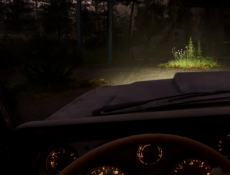
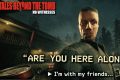
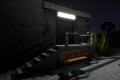
Terrible Lizards is a first-person horror platformer that combines exploration, fast parkour, dangerous chases, and a mystery surrounding an abandoned dinosaur attraction. The story takes place in 1992 at Dalton’s Dinos, an old roadside attraction located along Route 66 in New Mexico. What should have been an ordinary stop quickly turns into a serious problem when your car breaks down and you discover that the place is practically deserted. The employees are nowhere to be found, the attraction feels abandoned, and there is no obvious way to get help. With no smartphone or modern communication available, you begin searching the area and eventually find a telephone. A mysterious caller asks you to help locate a missing child, giving you a reason to enter deeper into Dalton’s Dinos instead of simply waiting beside the road.
The situation becomes much worse when you discover that the attraction is not as empty as it first appeared. Dangerous creatures roam its buildings, outdoor areas, and hidden sections, and you have no weapons capable of dealing with them directly. Terrible Lizards is not designed around fighting dinosaurs with guns. Your main advantage is movement, and surviving an encounter means escaping before whatever is chasing you gets close enough to catch you. The game combines this survival-horror structure with first-person platforming, making parkour a central part of both exploration and dangerous pursuit sequences.
Explore Dalton’s Dinos
Dalton’s Dinos was built as a colorful roadside destination filled with dinosaur-themed attractions and exaggerated prehistoric entertainment, but the version you discover has been left in a disturbing state. Public areas that were once meant for tourists are now empty, and signs of the missing employees remain throughout the location. Exploring these spaces allows you to gradually understand what happened before your arrival. The game does not immediately explain the entire situation, so investigating the environment is necessary if you want to understand why the attraction was abandoned and what caused the creatures to appear.
The location is also much larger than it initially seems. Dalton’s Dinos contains more than the areas visible from the highway, and progressing through the game eventually takes you into hidden and underground sections. Caves and concealed spaces beneath the attraction reveal that there was more happening here than ordinary tourists were ever supposed to know. The contrast between the cheesy dinosaur attraction above and the secret areas underneath it becomes an important part of the mystery. The farther you travel from the public sections, the more difficult it becomes to believe that Dalton’s Dinos was simply an unsuccessful roadside business.
Parkour Is Your Main Survival Tool
Movement is one of the most important mechanics in Terrible Lizards. Your character can run, jump, climb, slide, wall run, and use different environmental features to move through areas that cannot be crossed through normal walking alone. These abilities are necessary for exploration, but they become especially important when a creature begins pursuing you. Instead of turning around and fighting, you need to quickly recognize an escape route and use the available parkour mechanics to create distance.
The game gradually teaches you how its movement works before expecting you to combine different techniques. A simple jump may eventually lead into a wall run, followed by a climb or slide through another obstacle. Certain environmental elements can help you maintain momentum or reach areas that would otherwise be inaccessible. During ordinary exploration, you can take time to understand these routes, but chase sequences remove that luxury. When something is directly behind you, every jump and movement decision has to be made quickly.
You Cannot Fight the Creatures
Terrible Lizards deliberately removes the security that weapons provide in many horror games. There is no point where you suddenly receive a powerful gun and begin clearing the attraction room by room. The creatures remain dangerous because your primary response is always to escape them. When one appears, you need to look at the environment and determine how to get away rather than calculating how much ammunition you have left.
This changes the way you approach unfamiliar areas. A room is not simply a place to search for supplies; it can become part of a future escape route. Platforms, walls, gaps, narrow openings, and climbable surfaces all matter because they may provide the only way to avoid something pursuing you. Learning how different areas connect can therefore become useful later when the game suddenly changes from slow exploration to a high-speed chase.
Fast and Dangerous Chase Sequences
Chases are where the horror and platforming mechanics come together most directly. Once a creature begins pursuing you, simply holding the forward button is not enough. The route can contain jumps, walls, obstacles, drops, and sections that require specific movement techniques. You need to understand where you are going while simultaneously performing the actions required to get there.
Maintaining momentum is particularly important. Stopping in the middle of an escape to carefully examine the next obstacle can allow the creature behind you to close the distance. As you become more familiar with the controls, you begin reading environments differently. A wall is no longer just part of the scenery if you can run across it, and a narrow opening may represent an escape route rather than a dead end. Terrible Lizards encourages you to recognize these possibilities quickly and connect several movements into one continuous sequence.
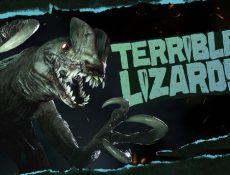
The creatures themselves make these situations unpredictable. Some encounters allow you to notice danger before it becomes immediate, while others can quickly force you into motion. Something that appears slow at first may suddenly become much more aggressive, so assuming that you always have enough time to plan your route can be a serious mistake.
A Mystery Hidden Beneath the Attraction
The disappearance of the Dalton’s Dinos employees is one of the first signs that something is wrong, but it is far from the only mystery. The strange phone call about a missing child gives you an immediate objective, yet it also creates additional questions. You do not initially know exactly who is calling, what happened to the child, or how the disappearance connects to the abandoned attraction. Finding answers requires continuing into increasingly dangerous parts of the location.
As you progress, the environment begins revealing evidence about what happened before you arrived. The attraction contains information that can be discovered through tapes, notes, recordings, and other details left behind. These pieces gradually provide context about Dalton’s Dinos and the people associated with it. Instead of receiving every answer through one large exposition scene, you can reconstruct much of the story by paying attention while exploring.
The underground areas make the mystery even deeper. Dalton’s Dinos appears to be an eccentric tourist attraction on the surface, but the existence of hidden caves and restricted locations suggests that its public image concealed something else. Moving deeper underground means moving farther away from anything that could be explained as part of a normal roadside business.
Search for Tapes, Notes, and Recordings
Exploration is useful for more than finding the path forward. Throughout Dalton’s Dinos, you can discover materials that provide additional information about the location and the events surrounding it. Tapes and recordings offer fragments of the past, while written material can reveal details about people who were present before everything went wrong. Individual discoveries may not immediately explain the entire story, but their meaning becomes clearer as additional information is uncovered.
This makes optional exploration worthwhile for players who want to understand the complete situation. Moving directly toward the next objective may keep the story progressing, but carefully examining rooms and less obvious areas can reveal details that would otherwise remain unknown. The game also includes smaller secrets and references hidden throughout its environments, rewarding players who investigate instead of treating every area purely as an obstacle course.
The 1992 Setting Matters
Setting Terrible Lizards in 1992 creates limitations that directly affect the protagonist’s situation. After your car breaks down, you cannot simply use a smartphone to call for assistance, check your location, or arrange transportation. Being stranded on Route 66 in New Mexico means that finding a working telephone becomes genuinely important. The mysterious call inside Dalton’s Dinos therefore serves as both a connection to another person and the beginning of the larger mystery.
The period also defines the visual personality of the attraction. Dalton’s Dinos represents the exaggerated style of old roadside tourist destinations, with giant dinosaur imagery and an intentionally cheesy prehistoric theme designed to attract passing travelers. Seeing that kind of environment abandoned creates an unusual atmosphere. The place was clearly built to be loud, colorful, and full of visitors, which makes its emptiness feel even more unnatural.
Horror Without Constant Darkness
Terrible Lizards does not need to place every encounter inside a nearly black corridor. Parts of Dalton’s Dinos exist in bright outdoor environments under the New Mexico sun, but visibility does not automatically make them safe. An abandoned tourist attraction in the middle of nowhere can feel uncomfortable even when you can clearly see everything around you, especially once you know that dangerous creatures are somewhere nearby.
The atmosphere changes as you move into enclosed and underground locations. Public tourist areas gradually give way to spaces that were never intended for ordinary visitors, creating a stronger sense that you are entering somewhere forbidden. Caves and hidden sections also provide different opportunities for platforming, forcing you to use movement mechanics in environments that are very different from the open attraction above.
Learn to Read the Environment
Progress in Terrible Lizards depends heavily on becoming comfortable with movement. The individual mechanics are understandable on their own, but later areas can require several of them in rapid succession. You may need to jump toward a wall, continue through a wall run, reach another platform, climb upward, and immediately continue moving without stopping. During a chase, failing one part of that sequence can allow the creature behind you to catch up.
Because of this, the player becomes more capable primarily through experience rather than traditional combat upgrades. You learn how far you can jump, which surfaces can be used, how to preserve momentum, and how to recognize possible routes without stopping to analyze every detail. The same environment that initially looks complicated gradually becomes easier to understand as you learn the movement system.
This also creates a clear difference between your first attempts at difficult sections and later ones. A route that initially feels chaotic can become smooth once you understand the correct sequence of actions. Mastering movement is effectively your strongest defense against the creatures inside Dalton’s Dinos.
Find the Missing Child
The search for the missing child gives the protagonist a reason to continue despite every warning sign telling them to leave. What begins as a request for help gradually becomes connected to the larger mystery surrounding Dalton’s Dinos. The missing employees, dangerous creatures, secret locations, and strange history of the attraction all suggest that the disappearance is not an isolated incident.
Finding the child therefore means uncovering what has happened to the entire location. Each new area provides another opportunity to discover information, but it also increases the danger. The deeper you investigate, the farther you move from the relatively familiar roadside attraction and the closer you get to whatever Dalton’s Dinos was hiding.
Survival Depends on Movement
Terrible Lizards builds its horror around the fact that you cannot simply eliminate the source of danger. If a creature finds you, surviving means using the environment more effectively than it does. Running is only the beginning. You need to understand when to jump, where to climb, which wall can be used to continue your route, and how to maintain enough momentum to stay ahead.
This makes platforming and horror part of the same system rather than two separate gameplay styles. Exploration teaches you how movement works, while chases test whether you can actually use those mechanics under pressure. The better you become at parkour, the more confidently you can navigate dangerous sections, but the creatures remain a threat because one mistake can immediately destroy the distance you have created.
Discover the Truth About Dalton’s Dinos
The central mystery extends far beyond a broken-down car and an abandoned attraction. Something happened to the employees of Dalton’s Dinos, and the creatures now roaming the area are evidence that the situation cannot be explained by a simple closure or accident. The mysterious caller, missing child, underground spaces, recordings, and abandoned facilities all contribute different pieces of the same larger story.
Exploring the attraction gradually changes your understanding of what the place actually was. The dinosaur-themed areas visible to tourists represent only one layer. Hidden underneath them are locations and information that suggest a much more disturbing history. Every new discovery gives you another reason to continue, even while the creatures give you increasingly good reasons to turn around.
Run, Climb, and Escape
At its core, Terrible Lizards is a horror game where escaping danger is something you have to actively master. You arrive at Dalton’s Dinos after your car breaks down on Route 66, discover an attraction with no employees in sight, and receive a mysterious request to find a missing child. What initially looks like an abandoned tourist destination gradually reveals hidden areas, strange evidence, underground caves, and creatures that should not be there.
Without weapons to depend on, movement becomes your main advantage. You must run through dangerous areas, jump across gaps, climb obstacles, slide through openings, use walls to cross difficult sections, and maintain momentum when something is directly behind you. Between these encounters, you can explore the abandoned attraction, search for tapes and recordings, investigate what happened to its employees, and uncover the secrets hidden underneath Dalton’s Dinos.
The farther you travel, the more demanding the movement becomes and the more disturbing the mystery gets. Terrible Lizards combines first-person parkour with horror in a way that makes every environment both a place to investigate and a potential escape route. You are not entering Dalton’s Dinos to hunt the monsters inside it. You are trying to discover what happened there while making sure those monsters never manage to catch you.