
























Hidden Layers Game
Advertisement
Advertisement


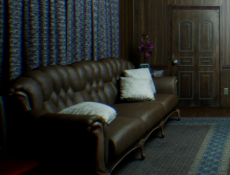

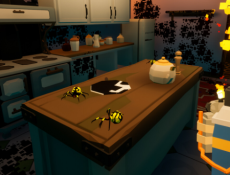


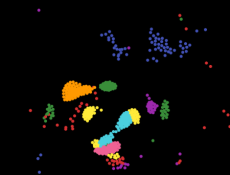


Hidden Layers is a puzzle game built around observation, visual discovery, and the challenge of finding what is concealed beneath the surface. Instead of relying on complicated controls or fast reactions, the game encourages you to examine each scene carefully, recognize subtle details, and discover how different elements relate to one another. What initially appears to be a simple image or environment can contain additional information that is not immediately visible, making patience and attention to detail essential parts of the experience.
The central idea is that appearances can be misleading. A scene may look straightforward when you first encounter it, but closer inspection can reveal hidden elements, unexpected connections, and details that change your understanding of what you are looking at. Each new discovery encourages you to reconsider the entire picture rather than concentrating only on the most obvious objects. Hidden Layers turns this process of observation into its main challenge, rewarding players who are willing to slow down, investigate carefully, and approach familiar-looking situations from a different perspective.
Look Beyond the Surface
The most important skill in Hidden Layers is learning to notice what is not immediately obvious. Each puzzle encourages you to examine the available visual information and determine whether something important has been concealed within it. The solution may not stand out at first glance, especially when surrounding details distract your attention or make an unusual element appear ordinary.
This creates a different kind of challenge from traditional action games. You are not trying to react faster than an opponent or memorize complicated combinations of buttons. Instead, you need to understand what the game is showing you and identify the information that matters. The longer you examine a scene, the more opportunities you have to notice details that escaped your attention during the first few seconds.
Successful observation often requires changing your approach. If concentrating on one area does not reveal anything useful, examining the broader composition may provide a new perspective. Something that appears insignificant by itself can become meaningful when compared with nearby elements. The game encourages this kind of careful visual reasoning throughout the experience.
Discover What Is Hidden
Hidden Layers builds its puzzles around the satisfaction of discovery. The most rewarding moments come when an element that initially seemed invisible or unimportant suddenly becomes recognizable. Once you identify the correct detail, the entire scene can appear different because you now understand something that was previously concealed.
This process makes each discovery feel earned. Rather than providing the answer immediately, the game allows you to investigate and gradually develop your own interpretation. Some puzzles may become clear after a brief inspection, while others require more patience and a willingness to reconsider earlier assumptions.
The challenge is not necessarily that the hidden information is extremely complicated. Sometimes the difficulty comes from the way ordinary visual elements blend together. Familiar shapes, patterns, and arrangements can distract you from the specific detail needed to progress. Learning to separate useful information from visual distractions becomes increasingly important.
Pay Attention to Small Details
Small differences can matter considerably in a game centered on hidden information. A shape that does not quite match its surroundings, an unusual arrangement, or an element that seems slightly out of place may deserve closer attention. Hidden Layers encourages you to inspect scenes systematically instead of relying entirely on your first impression.
Careful observation also helps prevent unnecessary guessing. When a puzzle appears confusing, randomly selecting different elements may not help you understand the intended solution. Looking at the scene again and identifying what makes particular details unusual is often a more productive approach.
The game rewards curiosity because visual information can be interpreted in different ways. Something you originally dismissed as decoration may turn out to be relevant, while an object that immediately attracts attention may simply be part of the surrounding composition. Distinguishing between these possibilities is part of the puzzle-solving process.
Solve Puzzles Through Observation
Hidden Layers emphasizes visual reasoning rather than complicated mechanical challenges. Each puzzle asks you to understand what is present in front of you and determine which details deserve further attention. The difficulty comes from interpreting the available information correctly, especially when the scene contains elements that can be easily overlooked.
A useful approach is to examine the entire scene before concentrating on individual details. Looking only at the most noticeable object can prevent you from recognizing something important elsewhere. By comparing different parts of the image and reconsidering your first impression, you can gradually narrow down the possibilities and identify the hidden information.
This style of gameplay makes patience valuable. Rushing through a puzzle may cause you to overlook the very detail needed to solve it, while careful examination can reveal a solution that initially seemed impossible to find.
A Challenge for Your Attention
One of the main appeals of Hidden Layers is the way it tests concentration. Visual puzzles can be deceptive because the human eye naturally focuses on recognizable patterns and prominent objects. Information that does not immediately attract attention can remain unnoticed even when it is directly in front of you.
The game encourages you to overcome that tendency by actively searching for inconsistencies and unusual arrangements. As you become more comfortable examining scenes, you can develop a more systematic approach to finding hidden details. Instead of scanning randomly, you begin comparing shapes, studying relationships between objects, and checking areas that might otherwise seem unimportant.
Each successful discovery reinforces the importance of careful observation. The satisfaction comes not from defeating an enemy or completing a difficult movement sequence, but from recognizing something that was present all along.
Discover the Complete Picture
The central challenge of Hidden Layers is understanding that the first thing you see may not represent everything a scene contains. Progress comes from looking more carefully, reconsidering familiar details, and identifying information concealed within the overall composition.
The experience is built around the satisfaction of discovery. A puzzle that initially appears confusing can suddenly become understandable once you notice the right detail. That moment of recognition is what makes observation-based challenges rewarding, especially when the solution was visible from the beginning.
Hidden Layers encourages you to approach every scene with curiosity rather than assuming that its most obvious elements tell the whole story. Examine the surroundings, question your first impressions, and search for the details that others might overlook.
Уточню важный момент: я не смог найти подтверждённую страницу игры именно под названием Hidden Layers. Поэтому это описание основано на предполагаемой концепции визуальных головоломок, а не на проверенных механиках конкретной игры. Если пришлёшь ссылку на игру, смогу написать такое же большое описание уже строго по её реальному геймплею.