











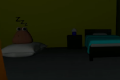


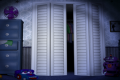
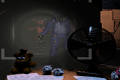

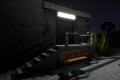
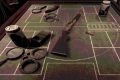
Rehaunted is a first-person psychological detective horror game that puts you inside a disturbing crime scene where almost nothing fits together as neatly as it should. You play as detective Connor Raines, who enters a house to investigate the death of a young woman. At first, the assignment appears to be a relatively straightforward examination of the scene: search the rooms, collect evidence, determine what happened, and establish a sequence of events. That simple objective quickly becomes much harder when the physical evidence begins contradicting the story the house seems to tell.


Rehaunted
Advertisement

Advertisement
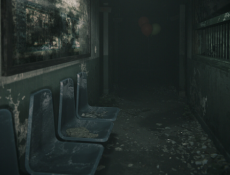
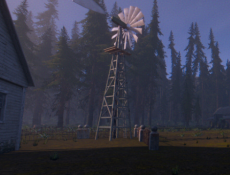

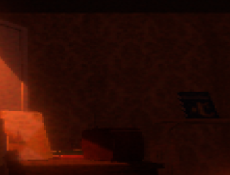

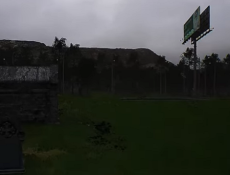
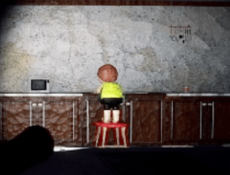
Instead of pushing you through a series of unrelated locations, Rehaunted concentrates its investigation inside one detailed house. Every room is part of the same case, and ordinary objects can become important once you understand their connection to other clues. Blood traces, fingerprints, recordings, personal possessions and details hidden from normal sight gradually turn the building into a puzzle. Progress comes from paying attention, using the correct investigative tools and thinking about how individual discoveries fit together rather than simply searching for the next door to open.
Investigating the Crime Scene
Connor arrives as a detective, and the game expects you to behave like one. Rooms need to be examined carefully because useful evidence is not always placed directly in your path. Something that initially looks insignificant may become relevant after another discovery changes its context. Rehaunted therefore rewards systematic exploration: checking surfaces, returning to suspicious areas and comparing new findings with information you have already collected.
The crime itself is the center of the experience. A young woman has been found dead inside her home, but reconstructing the circumstances surrounding her death becomes increasingly complicated. Evidence that should support a clear explanation instead raises additional questions. Traces found in one part of the house may conflict with information discovered somewhere else, while recordings and personal belongings reveal details that make earlier assumptions less reliable.
This structure makes exploration part of the actual detective work. You are not searching rooms simply to collect keys or trigger scripted events. You are trying to understand who was present, what happened inside the house and which pieces of information can actually be trusted.
Use Detective Tools to Find Hidden Evidence
Rehaunted gives Connor several practical tools, and each one provides another way to examine the scene. The UV flashlight can reveal traces that are difficult or impossible to notice normally, making it useful when a seemingly clean area deserves a closer inspection. The camera allows important discoveries to be documented, while the magnifier helps you examine small details that could otherwise be overlooked.
The walkie-talkie connects Connor with another detective during the investigation. These conversations are more than background chatter. As new information appears, you can discuss discoveries and choose responses during radio dialogue, allowing the investigation to develop through both physical evidence and conversation.
There is also an evidence board used to organize what has been discovered. As the number of clues increases, individual objects and traces begin forming connections. The challenge is not merely finding evidence but understanding what that evidence means when considered alongside everything else in the case.
Connect the Clues Instead of Waiting for an Answer
One of the most important aspects of Rehaunted is that the game does not constantly explain its mystery for you. Finding an object does not automatically produce a complete interpretation of it, and discovering several clues does not necessarily result in a convenient message telling you exactly what happened.
You have to compare information yourself. A fingerprint may establish that somebody interacted with an object, but that alone does not explain why. A recording can provide useful context while simultaneously creating a contradiction somewhere else. Blood traces can suggest a sequence of events that does not match the initial version of the incident. The more evidence Connor uncovers, the more important it becomes to distinguish confirmed facts from assumptions.
This approach gives the investigation a stronger sense of uncertainty. Rather than solving isolated puzzles with obviously correct answers, you are gradually reconstructing an event from incomplete and sometimes conflicting pieces of information.
A House That Changes the Nature of the Case
The house is more than a backdrop for the murder investigation. Because the entire case is concentrated within the building, its rooms gradually become familiar, which makes unusual changes and discoveries easier to notice. A place that initially seems like an ordinary home becomes increasingly uncomfortable as hidden details expose what happened there.
Rehaunted uses that familiarity to build tension. You may pass through the same area more than once, but your understanding of it changes as the investigation progresses. A harmless-looking room can become important after finding evidence elsewhere. An object you ignored earlier can suddenly make sense. The game constantly encourages you to reconsider places and details that seemed unimportant during your first inspection.
At the same time, the case begins moving beyond ordinary forensic investigation. Strange occurrences and supernatural elements appear around Connor, making it increasingly difficult to separate the disturbing history of the house from what is happening in the present.
Psychological Horror Built Around Investigation
Rehaunted does not abandon its detective mechanics when the horror begins. Instead, the two sides of the game are closely connected. You still need to search, observe and reason while the atmosphere around you becomes increasingly hostile and unpredictable.
The first-person perspective keeps you physically close to everything you examine. You have to enter dark rooms yourself, approach suspicious objects and search spaces where something clearly feels wrong. Cinematic presentation, realistic interiors and oppressive sound design are used to increase the tension without removing the player’s responsibility to investigate.
The result is a slower form of horror where uncertainty matters as much as direct danger. You know that something is wrong inside the house, but understanding exactly what is wrong is part of the mystery.
Evidence That Contradicts Itself
A major source of difficulty comes from contradictions. In a conventional detective story, collecting more evidence usually makes the answer progressively clearer. Rehaunted deliberately complicates that process. New discoveries can weaken theories that previously seemed convincing.
This forces you to keep reevaluating the case. Who can be connected to a particular room? Which events definitely occurred, and which ones are only implied? Does a recording confirm another clue or undermine it? Can physical evidence be reconciled with the information Connor has received?
The game makes these inconsistencies part of the investigation rather than treating them as minor background details. Solving the mystery requires noticing when two pieces of information do not agree and determining why that contradiction exists.
Radio Conversations and Dialogue Choices
Connor does not conduct the entire investigation in complete isolation. His walkie-talkie provides contact with another detective, giving him a way to report discoveries and discuss what they might mean. Dialogue choices allow you to respond during these conversations instead of simply listening to predetermined exchanges.
These discussions provide additional context for the evidence and can challenge the conclusions you are beginning to form. Because the case contains deliberately conflicting information, conversations can also draw attention to assumptions that deserve another look.
The radio consequently becomes part of the investigative process. It provides a human connection outside the house while also giving the story another channel through which information, doubts and interpretations can emerge.
Reconstruct What Happened That Night
Ultimately, the central objective in Rehaunted is reconstruction. Individual fingerprints, photographs, blood traces, recordings and personal items matter because together they provide fragments of the events surrounding the woman’s death.
The evidence board helps turn those fragments into a larger picture, but the player still has to understand the relationships between them. The game avoids reducing the mystery to a simple checklist where collecting every item automatically solves the crime. Instead, it expects you to examine the available facts and develop your own understanding of the events.
That makes careful exploration especially important. Missing a small detail can leave a gap in your interpretation, while finding a previously overlooked clue can completely change how another piece of evidence should be understood.
A Focused Detective Horror Experience
Rehaunted is designed as a compact psychological horror experience rather than a long campaign filled with unrelated missions. Its roughly two-to-three-hour structure keeps the focus on a single case, one house and the gradual discovery of what occurred there.
There are no large open areas distracting from the investigation. The important questions remain concentrated around the victim, the evidence and the secrets hidden throughout the property. This gives the game a tight structure in which almost every new discovery can contribute directly to either the case or the increasingly disturbing atmosphere.
For players who enjoy horror built around observation and mystery rather than constant combat, Rehaunted offers an investigation where looking closely is one of your most important abilities. Search the crime scene, expose traces hidden from ordinary sight, photograph important evidence, examine suspicious details, communicate through the radio and connect your discoveries on the evidence board.
The deeper Connor Raines gets into the house, the less straightforward the original case becomes. What begins as an investigation into one woman’s death gradually exposes contradictions, concealed information and disturbing events that cannot be explained by the first version of the story. Rehaunted leaves you with the responsibility of sorting through those fragments and deciding what the evidence really says about the night everything happened.
Comments (0)


2026
