























Newton’s Playground is a physics-based puzzle game where players must guide a green ball toward a red balloon using objects they draw themselves. Instead of controlling the ball directly, players create ramps, levers, and other simple machines that interact with the environment. Gravity, momentum, and collisions determine how these objects behave. Each puzzle presents a different arrangement of platforms and obstacles, requiring players to find a way to move the ball to its destination.



Newton’s Playground
Advertisement
Advertisement






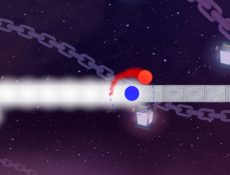

Newton’s Playground is a physics-based puzzle game where players must guide a green ball toward a red balloon using objects they draw themselves. Instead of controlling the ball directly, players create ramps, levers, and other simple machines that interact with the environment. Gravity, momentum, and collisions determine how these objects behave. Each puzzle presents a different arrangement of platforms and obstacles, requiring players to find a way to move the ball to its destination.
Levels and Puzzle Objectives
The game features 74 puzzles divided into seven playgrounds. Each level starts with a ball positioned somewhere in the environment and a balloon that serves as the target. Sometimes the balloon is located above the ball, while other puzzles require moving across gaps or around obstacles. Players must examine the layout and decide which objects could help them complete the task. There is no traditional storyline or combat system, as the main objective is to solve increasingly complex physics problems.
Drawing Objects and Using Physics
Players use the mouse to draw objects directly onto the screen. Once created, these objects become part of the physics simulation and respond to gravity and other forces. Their size, shape, and position influence how they interact with the ball.
The main tools and mechanics include:
- Ramps: Guide the ball along slopes or across gaps.
- Levers: Use pivot points to lift or move objects.
- Pendulums: Swing around fixed points and transfer momentum to the ball.
- Springboards: Apply force to launch the ball toward another area.
- Ball Movement: Allows small adjustments to the ball’s position on flat surfaces.
Players can combine different mechanisms within a single puzzle. For example, a pendulum might push the ball onto a ramp that directs it toward the balloon. Successful solutions depend on how the objects are drawn and positioned.
How to Solve Puzzles
Newton’s Playground encourages experimentation rather than requiring a single predetermined approach. Players can test different shapes, change angles, and observe how the ball responds. A structure that is too heavy or incorrectly positioned may send the ball in the wrong direction, while a properly designed mechanism can move it toward the target.
As players progress, puzzles require more attention to force, balance, and movement. Understanding how simple machines work makes it easier to create effective solutions and complete the later challenges.
Comments (0)


2026
