
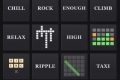














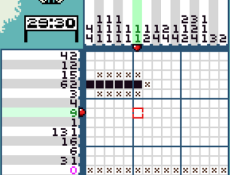
Pixel Pup is built around revealing hidden pixel images one grid at a time. Each puzzle provides number clues along the rows and columns, and the player uses them to determine which squares should be filled. A correct solution gradually produces a recognizable picture, while mistakes receive a penalty. There is no story campaign to follow; progress is based entirely on clearing puzzle packs, increasing the solved count, and finding extra challenges hidden throughout the game.


Pixel Pup
Advertisement
Advertisement







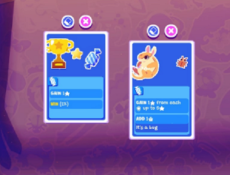
Pixel Pup is built around revealing hidden pixel images one grid at a time. Each puzzle provides number clues along the rows and columns, and the player uses them to determine which squares should be filled. A correct solution gradually produces a recognizable picture, while mistakes receive a penalty. There is no story campaign to follow; progress is based entirely on clearing puzzle packs, increasing the solved count, and finding extra challenges hidden throughout the game.
From Small Grids to Mosaics
Puzzle sizes range from compact 5×5 boards to larger 15×15 layouts. The handcrafted collection is divided into eleven themed packs, including subjects such as DIY, The Nineties, Zoology, and a Taiyaki Fabulous crossover. Four packs work differently by splitting one large picture into several smaller nonograms that eventually combine into a complete mosaic.
The player can:
- solve numbered nonogram grids;
- mark incorrect spaces with Xs;
- use hints when stuck;
- complete themed puzzle collections;
- assemble larger mosaic images;
- track the total number of solved puzzles;
- pause a puzzle with quick save;
- search for hidden Mini Franny stamps;
- try thousands of randomly generated boards.
More Than the Main Puzzle Sets
Alongside the 210 handcrafted puzzles, Pixel Pup contains 3,786 randomly generated challenges. These include 20×15 grids that are larger than the standard campaign puzzles, giving players an additional source of puzzles after finishing the themed packs.
Eleven Mini Franny stamps are also hidden around the game, creating a small secondary collection for players who explore menus and other areas carefully.
Solving Together or Competing
Two-player modes change the usual solitary nonogram format. Cooperative play lets two players work on the same puzzle, while competitive mode turns solving into a race to see who can finish first.
Pixel Pup keeps its progression focused on logic rather than upgrades or character development. The difficulty comes from interpreting increasingly complicated number patterns, avoiding unnecessary mistakes, and working through larger grids. Between handcrafted sets, mosaics, random puzzles, hidden stamps, hints, and multiplayer variations, the game provides several ways to approach the same central nonogram rules.
Comments (0)


2026
