
























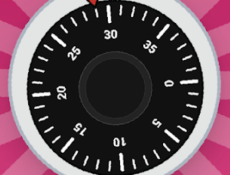
Combination Lock Practice is a simulation focused on teaching players how to open a rotary combination lock. The game presents an interactive lock with a numbered dial that reacts to touch controls. Its main purpose is to explain the correct turning sequence and allow repeated practice without using a physical lock. Visual instructions, animated arrows, and feedback from the dial indicate what the player should do next.



Combination Lock Practice
Advertisement
Advertisement










Combination Lock Practice is a simulation focused on teaching players how to open a rotary combination lock. The game presents an interactive lock with a numbered dial that reacts to touch controls. Its main purpose is to explain the correct turning sequence and allow repeated practice without using a physical lock. Visual instructions, animated arrows, and feedback from the dial indicate what the player should do next.
Purpose and Game Structure
There is no story, dialogue, or character progression in Combination Lock Practice. The player does not complete missions or explore locations. Instead, each session begins with a three-number combination that must be entered correctly. The standard dial uses numbers from 0 to 39, while additional settings include ranges from 0 to 29 and 0 to 49.
Entering a Combination
To open the lock, the player drags the dial in the required directions and stops on the displayed numbers. The sequence follows the method used by standard rotary locks. If the player turns in the wrong direction, misses a number, or fails to complete a full rotation, the attempt can be restarted.
The basic process includes:
- Turn the dial clockwise to clear the lock.
- Continue clockwise and stop at the first number.
- Turn counterclockwise, pass the first number once, and stop at the second.
- Turn clockwise directly to the third number.
- Pull the lock open after entering the complete sequence.
The game does not use traditional levels with separate maps or objectives. Progress comes from practicing different combinations and completing the process with fewer errors. Players can repeat the guided exercise, enter a custom code, or use random combination mode to receive a new sequence. This makes it possible to practice a real locker code or train with unfamiliar numbers.
Practice Modes and Difficulty
Guided practice keeps the combination visible and provides instructions during every stage. Expert Mode removes the timer and combination from view after the player starts turning the dial, requiring the sequence to be memorized. A best-time system records faster attempts and provides a measurable goal. Players can also adjust dial colors, backgrounds, and animations, although these options do not change the lock mechanics. Success depends on remembering the numbers, following the clockwise-counterclockwise-clockwise order, and stopping the dial accurately.
Comments (0)


2026
