

























Dartwords is a daily guessing game built around semantic distance rather than spelling. The player has ten attempts to discover one hidden word, but the round begins without a category, definition, starting letter, or visible set of possible answers. There is no story mode, character progression, inventory, or campaign. Each day works as a separate puzzle, and success depends on using the feedback from previous guesses to decide what concept should be tested next.



Dartwords
Advertisement
Advertisement











Dartwords is a daily guessing game built around semantic distance rather than spelling. The player has ten attempts to discover one hidden word, but the round begins without a category, definition, starting letter, or visible set of possible answers. There is no story mode, character progression, inventory, or campaign. Each day works as a separate puzzle, and success depends on using the feedback from previous guesses to decide what concept should be tested next.
Every Guess Works Like a Question
When the player enters a word, Darty responds with a clue based on the relationship between that word and the target. The response may suggest a difference in size, purpose, category, location, or another property. This means a guess does not need to resemble the answer in spelling to be useful. A word from a completely different category can still provide valuable information if Darty’s response helps eliminate a large group of possibilities.
The main actions are:
- submitting one word at a time;
- using no more than ten guesses;
- reading Darty’s reaction;
- checking how close the dart lands to the center;
- comparing several previous guesses;
- changing direction when a concept is clearly wrong;
- becoming more specific as the target gets closer.
The Dartboard Shows Conceptual Proximity
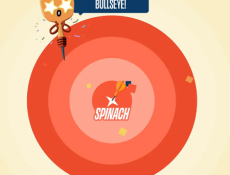
The visual target acts as a second clue system. A dart that lands far from the bullseye suggests that the guess is not closely related to the answer, while a near-center hit means the player is exploring a more relevant concept. The exact relationship can still be indirect, so a close result should not automatically be treated as a synonym. It can instead point toward a shared use, category, environment, or physical characteristic.
Daily Puzzles Reset the Search
Dartwords does not have conventional levels. Each daily hidden word is one complete challenge, and players begin the next day from zero with a new target. Older puzzles can also be replayed through the archive, which makes it possible to practice without waiting for the next daily word.
A strong strategy is to make each guess serve a clear purpose. Early attempts should test broad areas, while later ones should compare more closely related concepts once the dartboard begins showing stronger results. Repeating similar words too early can waste attempts, so the most efficient route usually comes from changing categories quickly when the evidence points away from the current idea.
Comments (0)


2026
